


The market for 3D printed figures has grown significantly in recent years, and with it the number of replicas that imitate original products with increasing detail. Identifying 3D printed figure replicas is not as simple as it seems: some sellers present very careful photos that hide cheap materials, incorrect proportions, and poor finishes. If you collect figures or look for authentic pieces, knowing how to distinguish an original from a copy can save you money and serious disappointment.
Table of contents
- Key points
- What you need before inspecting
- Step-by-step visual and physical inspection
- Digital tools to verify authenticity
- 3D printing processes and what they reveal
- My opinion after years of evaluating figures
- Authentic 3D Printed Figures with Reimii
- Frequently Asked Questions
Key points
| Point | Details |
|---|---|
| Physical inspection first | Examine weight, smell, burrs, and joints before trusting any product photo. |
| Combine multiple signals | Using multiple indicators reduces errors and avoids false alarms when assessing authenticity. |
| Use digital tools | Platforms like Sketchfab or CGTrader allow you to compare geometry and detect 3D design copies. |
| Know the printing processes | FDM, SLA, and SLS produce very different finishes; understanding them helps you recognize cheap replicas. |
| Buy from verified sources | Buying from stores with a proven reputation eliminates most risks from the start. |
What you need before inspecting
Before analyzing any figure, it is advisable to prepare with the appropriate tools. Laboratory equipment is not necessary, but certain basic resources make the difference between a superficial review and a real evaluation.
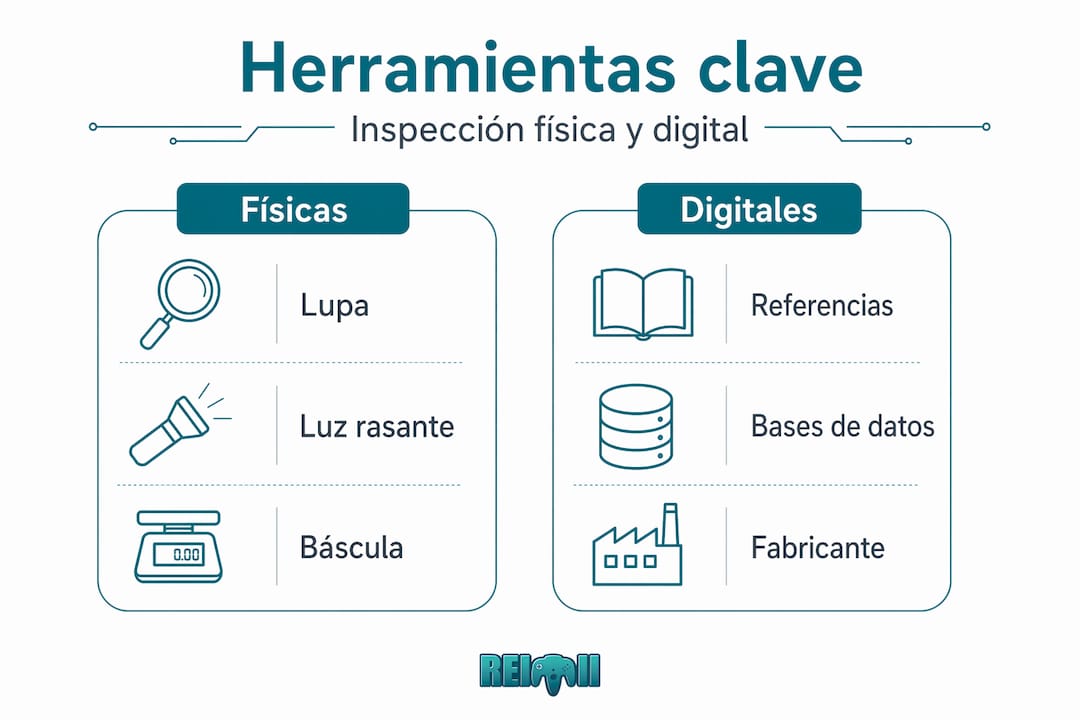
The most useful physical tools are a magnifying glass, a precision scale, and a grazing light source (a small flashlight works perfectly). The scale is especially valuable because replicas often use plastics that are lighter or denser than the originals, resulting in a noticeably different weight than expected.
For the digital part, you need access to official manufacturer references or 3D model databases. Platforms like Sketchfab or CGTrader offer search by geometric similarity, allowing you to compare the model you have against original files published by the creator.
Regarding the legal framework, it is important to know that in many countries buying or selling counterfeit figures can have legal consequences, especially when registered trademarks are involved. This guide is aimed at collectors who want to protect their investment, not to reproduce others' designs.
| Resource | Recommended tool | What it is for |
|---|---|---|
| Physical inspection | Magnifying glass + raking light | Detect burrs, layer lines, and irregular finishes |
| Weight and material | Precision scale | Compare with manufacturer specifications |
| Visual references | Manufacturer's official website | Contrast proportions, colors, and details |
| Digital 3D analysis | Sketchfab, CGTrader, 3DExport | Compare model geometry and topology |
| Packaging and seals | Official documentation | Verify holograms, logos, and legal texts |
Step-by-step visual and physical inspection
This is the most accessible and also the most revealing stage. Most replicas give themselves away in direct physical inspection, even when the ad photos look flawless.
Packaging never lies completely
The first contact with a figure is its box. Counterfeits show pixelated images, logos with incorrect proportions, and legal texts with spelling errors or generic fonts. An original has sharp text, consistent colors, and a uniform print finish across the box.
Pay special attention to holograms and authenticity seals. Counterfeits lack valid holograms or have degraded versions that do not reflect light characteristically. Tilt the box under direct light: an original hologram produces complex iridescent reflections; a fake one simply shines flatly.
Paint and sculpting quality
On the figure itself, the most common problems in replicas are:
- Paint with edges spilling outside the intended area or colors blending between zones
- Loss of detail in small parts like fingers, fine hair, or clothing textures
- Asymmetrical eyes or slightly incorrect positioning compared to the original design
- Excessive gloss or incorrect matte finish on surfaces that should have the opposite finish
Material, weight, and smell
Touch and smell are two senses online buyers cannot use, but you can when you have the figure in hand. Cheap replicas are usually made with low-quality PLA or ABS that emit a stronger and different odor than the engineering plastic used in originals. Some counterfeits smell burnt or chemical even weeks after being made.
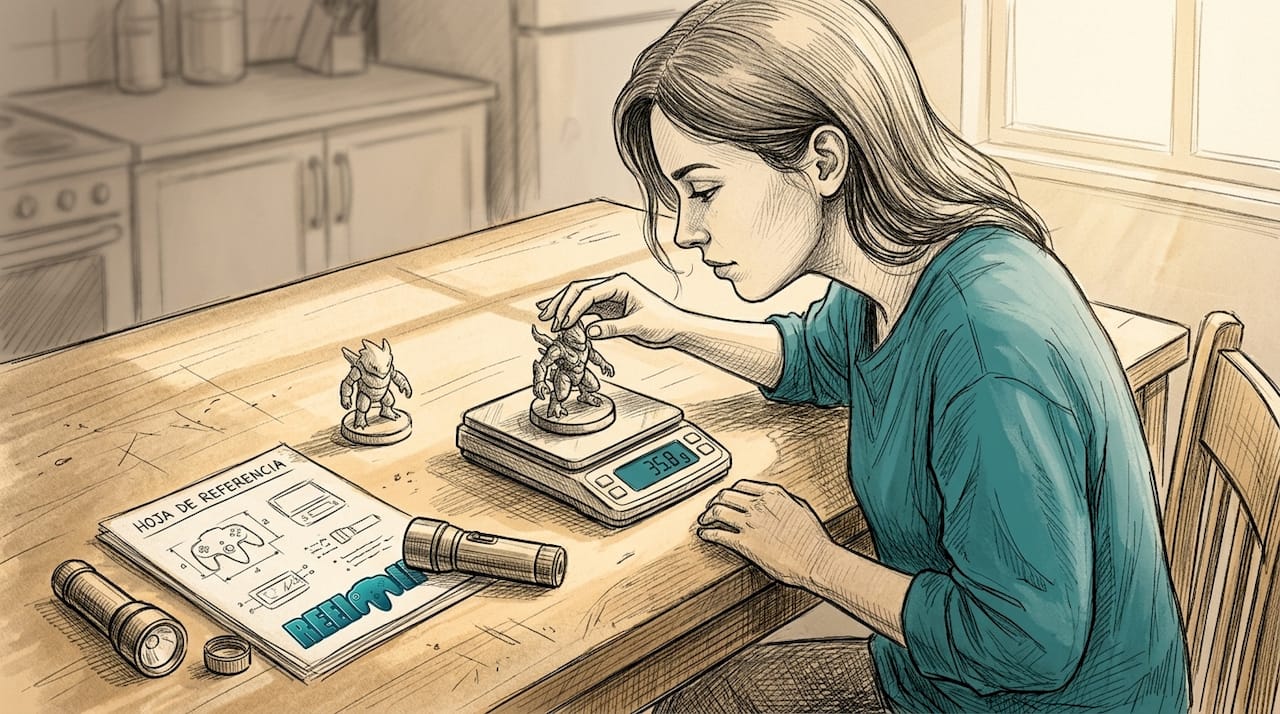
Weight is another reliable indicator. Weigh the figure and compare it with the manufacturer's specifications. A difference of more than 10% usually indicates that the material is not correct.
Joints, burrs, and assembly
Examine the joints between parts with a magnifying glass. In a well-made original, the seams are clean and the cuts precise. In a cheap replica, you will see plastic burrs, visible glue around the joints, and surfaces that do not fit perfectly.
Pro tip: Place the figure on a flat surface and shine a flashlight from a very low angle (almost horizontal). This grazing light technique reveals imperfections like ripples, layer lines, and mold marks that are completely invisible under normal lighting.
Digital tools to verify authenticity
When physical inspection leaves doubts, digital tools can resolve the case. This approach is especially useful when buying online or when you have access to the 3D model file.
-
Search for the model on specialized platforms. Upload an image of the figure to reverse image search tools or look for the model name on Sketchfab, CGTrader, or 3DExport. If the design appears under a different name or with a creator other than the declared one, it’s a clear sign of copying.
-
Compare the model’s geometry and topology. Structural analysis of the model is more reliable than comparing photos of the final product. Copies may have different surface finishes but maintain the same base topology as the stolen original. A 3D viewer like Tripo or the one integrated in Sketchfab lets you inspect the mesh from all angles.
-
Cross physical evidence with digital. Neither method alone guarantees a definitive verdict. If physical inspection detects suspicious signs and digital analysis confirms the geometry matches a model of dubious origin, the likelihood of a replica is very high.
-
Watch marketplaces and social media. Search for the product name on sales platforms and filter by price. If the same item appears at prices far below official channels, the risk of a replica increases significantly.
-
Check collector forums. Specialized communities maintain updated lists of problematic sellers and models known as replicas. This collective knowledge is hard to match with any technical tool.
Pro tip: Recording unique features of your original figures (manufacturer marks, batch number, specific design details) in a personal catalog greatly speeds up future verifications and gives you a clear reference for comparison.
3D printing processes and what they reveal
Understanding how figures are made gives you a huge advantage in identifying 3D replicas. Not all 3D printers produce the same level of detail, and that difference leaves visible traces on the final piece.
The three most common processes in collectible figures are:
| Process | Typical accuracy | Characteristic signs |
|---|---|---|
| FDM (filament) | Low to medium | Visible layer lines, rough textured surfaces |
| SLA (photocurable resin) | High | Smooth surfaces, fine details preserved |
| SLS (laser sintering) | Very high | No supports, complex geometry well replicated |
The FDM process is more economical but has clear limitations in the sharpness of the final finish. A cheap replica made with FDM and a high layer height (0.2 mm or more) will show visible horizontal lines on curved surfaces, especially on faces, arms, and bases. A high-end original made with SLA will have surfaces that feel almost perfectly smooth to the touch.
The mechanical tolerances of printing also affect the joints between parts. In FDM, assembled pieces can have gaps up to 0.5 mm that would be nonexistent in an original SLA resin figure. If you see that a part of the figure is loose or doesn’t fit precisely, it was probably printed in FDM with generous tolerances, indicating cheap production.
The difference between an economical replica and a high-fidelity figure is also noticeable in very small details like seams, inscriptions, and textures under 1 mm. In FDM, these details simply disappear or become distorted. In SLA, they are clearly preserved. This difference alone can be enough to distinguish high-quality 3D printed figures from cheap imitations.
My opinion after years of evaluating figures
After reviewing dozens of 3D printed figures, what surprised me most is how much buyers trust the photos in the listing. Photos can easily lie with good lighting and a macro lens. The physical piece never lies.
My experience has taught me that the biggest mistake a collector makes is not unknowingly buying a replica. It’s buying from unverified channels because the price was tempting and then trying to justify the purchase to themselves. I’ve seen figures sold at original prices that were obvious replicas to anyone who held them for ten seconds.
What really protects a collection is not knowing how to perfectly distinguish 3D figures. It’s always buying from stores with a clear history, real reviews, and a return policy. When the seller has all that, the chance of a replica drops drastically before you even have to check anything.
I also believe that the counterfeit market will not disappear. But there’s no need to obsess over it either. If you have the basic knowledge from this guide and shop wisely, you can enjoy collecting without turning it into a constant source of anxiety.
— Marina
Authentic 3D Printed Figures with Reimii
If you want to completely avoid the problem of replicas, the most direct solution is to buy from a source with verifiable quality from the origin. Reimii produces all its pieces with its own quality control and selected materials, which means that every figure or accessory you receive is exactly what you see.
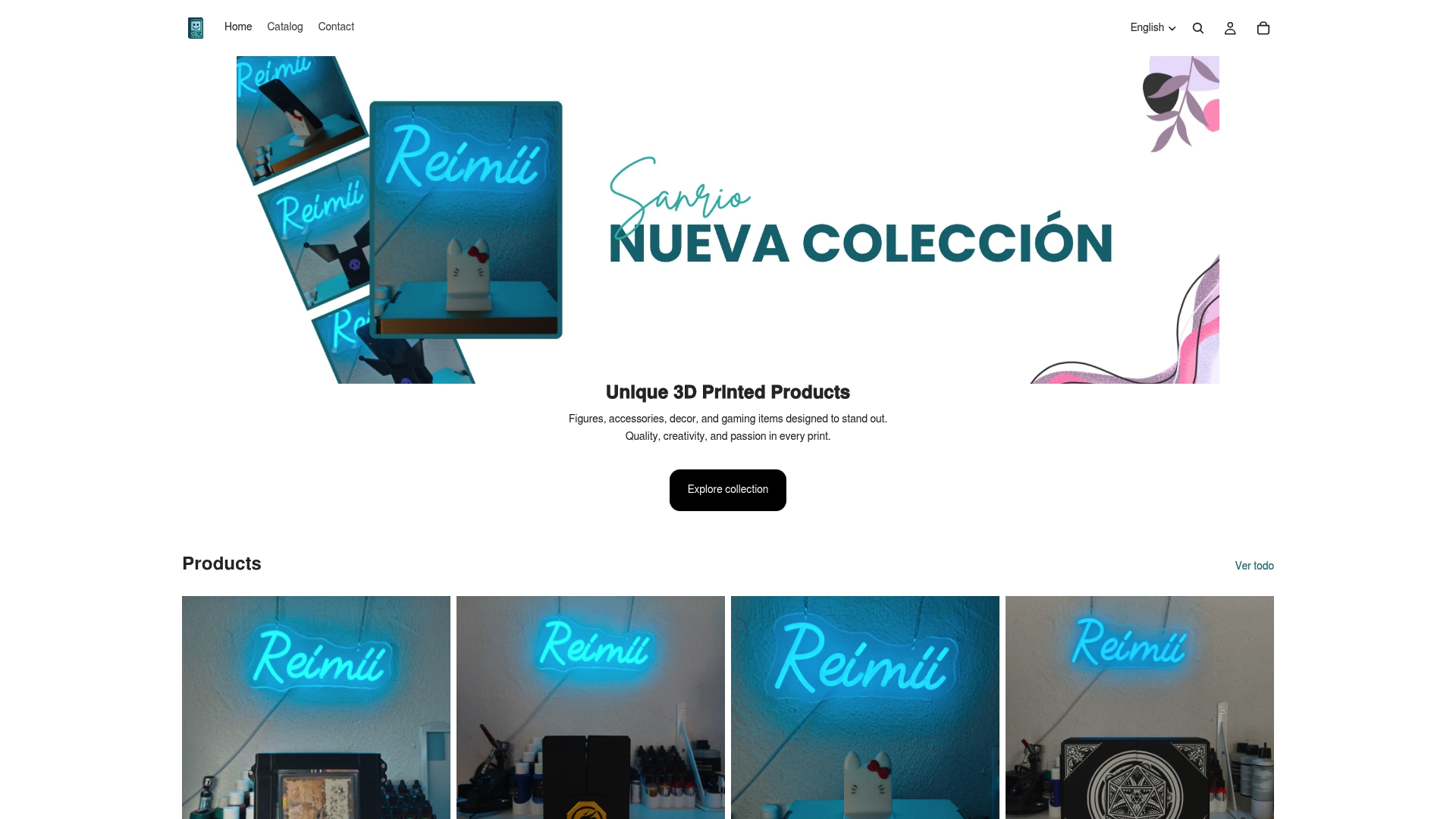
At the Reimii store you will find figures, mobile stands, and board game accessories with SLA finishes and high-quality materials. For example, the Hello Kitty 3D printed stand and the Kuromi stand are concrete examples of what can be achieved when the printing process is well executed. Reimii also offers a complete Sanrio collection for collectors, and a D&D kit for those who want to take their games to the next level. Each product includes a guarantee that no replicas are involved.
Frequently Asked Questions
How to quickly identify a 3D figure replica?
Check the weight, smell, and joints between parts with a magnifying glass. Replicas show burrs, visible glue, and plastics with a different smell than the original.
What printing process do quality original figures use?
Most high-end collectible figures use SLA or SLS, which produce smooth surfaces and preserved fine details. The more economical FDM process leaves visible layer lines that reveal a lower-cost production.
Are digital tools useful for detecting 3D replicas?
Yes. Platforms like Sketchfab or CGTrader allow you to compare the geometry and topology of the model, which remains almost identical even when the surface appearance has been modified.
Does a low price always indicate a replica?
Not always, but it is the most common warning sign. If the price is far below the official channel and the seller has no verifiable history, the likelihood of a replica is high. Combining price analysis with physical inspection offers greater certainty.
Is it illegal to buy counterfeit 3D printed figures?
It depends on the country and the brand involved. In many markets, buying or reselling figures that reproduce designs with registered trademarks can have legal consequences. The safest option is always to buy from authorized stores or those with verifiable backing.
Comentarios
Todavia no hay comentarios.