


Knowing how to value 3D printed figures in the market is one of the most specific challenges faced by any hobbyist or collector who wants to sell their pieces without working at a loss or leaving money on the table. The global 3D printing market was valued at 23.41 billion USD in 2025 and is projected to reach 136.76 billion USD by 2034, making this sector one of the fastest-growing today. More competition means setting the right price is no longer optional: it’s the difference between a profitable hobby and one that costs you money.
Table of contents
- Key points
- Tools to value 3D printed figures
- How to calculate the price of 3D printed figures
- Market analysis: niches and trends in 2026
- Strategies to increase the value of your figures
- My perspective as a sector professional
- Discover quality 3D printed figures at Reimii
- Frequently Asked Questions
Key points
| Point | Details |
|---|---|
| Know your real costs | Include material, electricity, depreciation, and time to calculate a sustainable price. |
| Apply margin for errors | Reserve between 5 and 10% of the final price to cover reprints and printing errors. |
| Choose the right channel | Etsy favors exclusivity and high margin; Mercado Libre prioritizes volume and price competition. |
| Specialization over volume | Niches like RPG miniatures or custom figures generate margins up to 75%. |
| The finish defines the value | Post-processing, painting, and professional packaging directly increase the perceived price. |
Tools to value 3D printed figures
Before pricing any piece, you need to know the resources you work with. It’s not enough to know how much filament you used. Valuation starts with understanding the real production cost from multiple angles.
The first block is materials and equipment. Resin printers (MSLA or DLP) produce pieces with fine detail, making them preferred for miniatures and collectible figures. Filament printers (FDM) are more economical in material but require more post-processing for clean finishes. Each type directly affects the price you can charge and the customer you reach.
- Print cost calculators: Tools like Chitubox, PrusaSlicer, or specific third-party calculators allow you to estimate the exact material consumption per piece and convert it into euros or pesos.
- 3D viewers for pre-inspection: Using a specialized 3D viewer before printing prevents material waste of up to 10 or 15%, as well as ensuring the piece has the necessary dimensional quality to justify a high price.
- Market reference platforms: Etsy, Mercado Libre, cgtrader, and wargame forums are direct sources of information about which similar figures sell and at what price.
- Operating cost log: Keep a monthly record of electricity consumed, machine hours, resin or filament used, and personal work time. Without this data, any price you set is a guess.
Professional advice: Create a spreadsheet with each piece you produce: material, time, electricity, and final sale price. After 10 pieces, you’ll have real data to adjust your margins accurately.
How to calculate the price of 3D printed figures
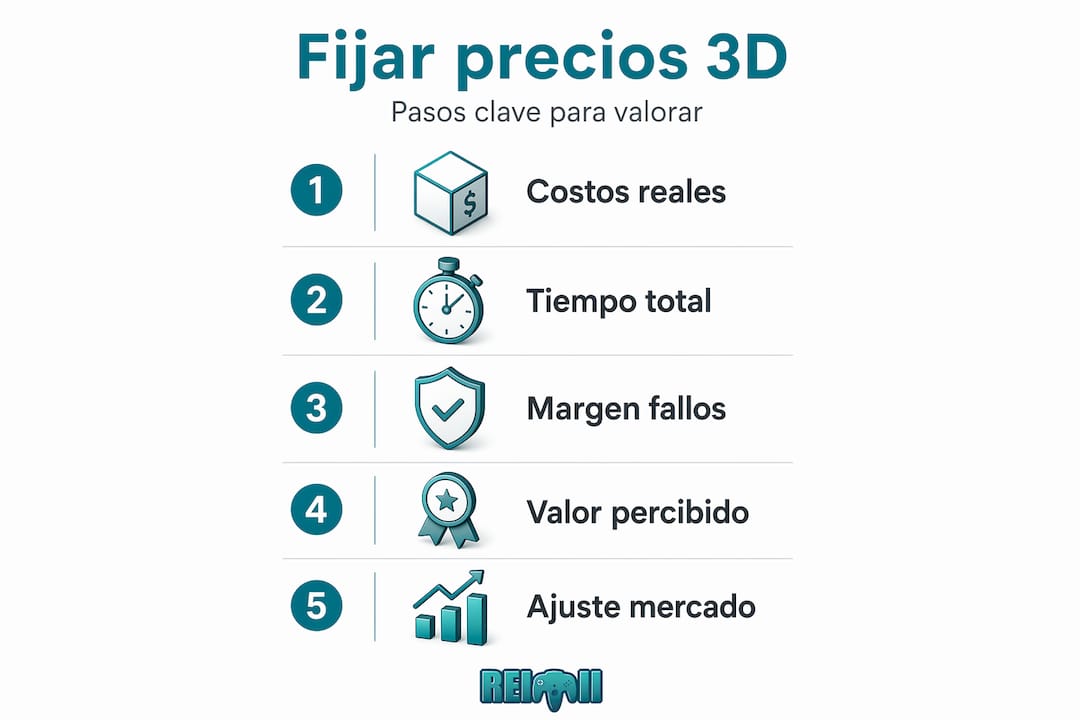
This is the core of the process. There are four components you can’t ignore if you want a price that works long-term.
- Material cost: Calculate the exact weight or volume of resin or filament used per piece. For 28mm RPG miniatures, the material cost ranges from 0.50 to 1.50 euros.
- Electricity cost: A resin printer consumes between 30 and 80 W/h. Multiply the printing hours by your electricity rate. For a 45-minute miniature, it’s usually less than 0.10 euros, but add up in productions of 20 or more pieces simultaneously.
- Equipment depreciation: Divide the cost of your printer by the estimated hours of useful life (between 2,000 and 5,000 hours for most equipment) and add that hourly value to each piece.
- Work time rate: This is the point most hobbyists forget. Setting an hourly rate between 15 and 20 euros for active work (preparation, post-processing, packaging) is what separates a sustainable business from a hobby that doesn’t scale.
After adding these four components, add a margin for errors of 5 to 10%. Reprints are inevitable, and that cost must be covered before calculating profit.
The following table shows real ranges for three common types of figures:
| Type of figure | Material cost | Printing time | Sale price | Gross margin |
|---|---|---|---|---|
| 28mm RPG miniature | 0.50 to 1.50 € | 30 to 45 min | 8 to 15 € | 60 to 75% |
| 15 cm decorative bust | 5 to 10 € | 1 to 1.5 hrs | 35 to 60 € | 50 to 70% |
| Custom functional piece | 2 to 8 € | 1 to 3 hrs | 20 to 50 € | 40 to 65% |
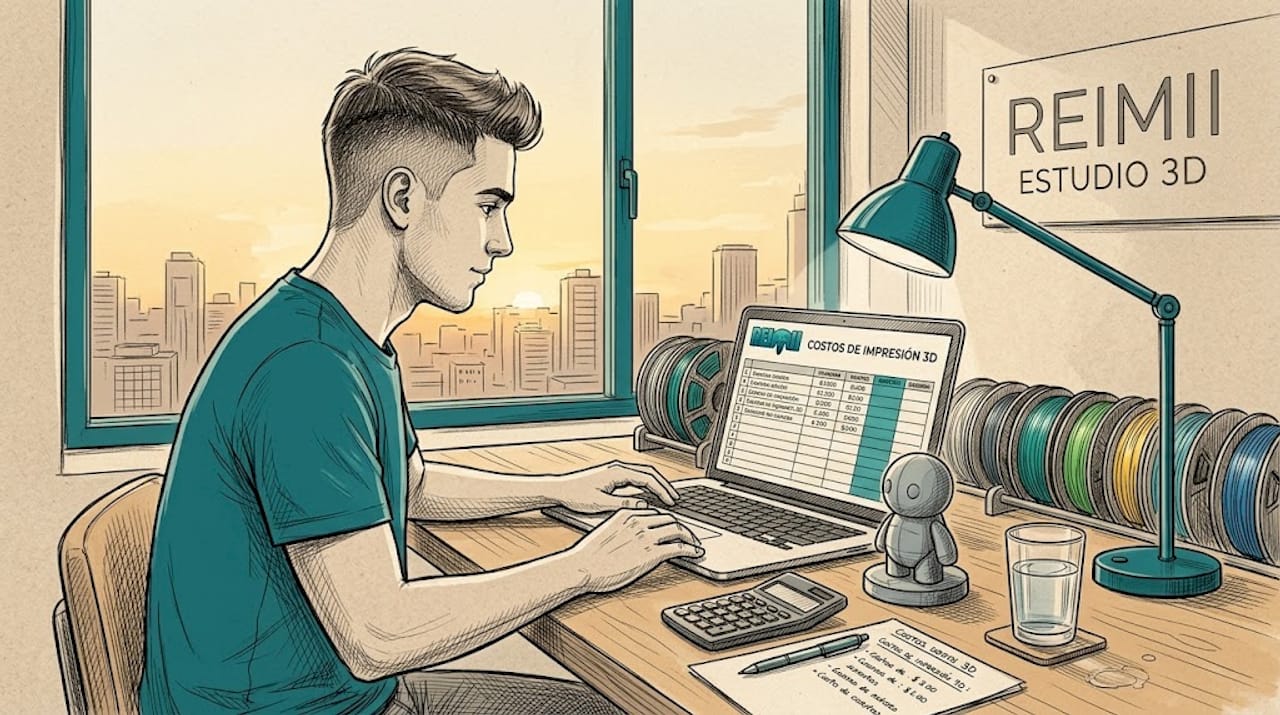
Professional advice: If you sell in batches (for example, sets of miniatures for a board game), you can reduce preparation costs per piece and maintain a higher margin without lowering the unit price.
15 cm decorative busts are a particularly interesting example: with material costs from 5 to 10 euros and sale prices reaching 60 euros, they offer one of the best cost-price ratios in the usual catalog of an independent producer.
Market analysis: niches and trends in 2026
Knowing your production numbers is only half the job. The other 50% is understanding where and to whom to sell. The 3D market analysis for figures starts by identifying which niche your pieces generate the most perceived value in.
The niches with the highest documented profitability in 2026 are:
- Miniatures for wargames and RPGs: Communities like Warhammer, Dungeons & Dragons, or independent miniature games seek pieces with a level of detail that justifies high prices and builds customer loyalty.
- Custom figures and portraits: Turning a photo into a printed figure is a product with high emotional value. Customers pay significantly more for something unique.
- Themed decoration: Pieces for desks, shelves, or photography settings have steady demand and little direct price comparison.
- Board game accessories: Organizers, tokens, and custom boxes are increasingly in demand among collectors. You can see a detailed example of this type of product in the guide on 3D printed boxes.
The choice of sales channel influences as much as the product itself. According to 2026 data, Etsy is ideal for exclusivity and high margins, while Mercado Libre works better for those seeking volume with lower margin per unit. On Etsy, buyers expect to pay more for something unique. On Mercado Libre, they actively compare prices and look for the cheapest offer.
Platform comparison also applies to the world of physical collectibles. The collectible figures market shows a clear trend: exclusivity and limited editions generate a sustained price premium that mass editions cannot match.
The impact of exclusivity is measurable. A figure with a generic design competes with thousands of similar listings. A personalized figure, with story and context, emotionally connects with the buyer and reduces direct price comparison. This is one of the most overlooked principles in 3D market analysis by new producers.
Strategies to increase the value of your figures
Knowing how much your pieces cost is not enough if you don’t know how to present them so the buyer perceives that value. This is where many producers stop earning.
- Professional post-processing and painting: A piece that is un-sanded, with support marks or without priming does not convey quality, even if the print was technically perfect. Sanding, layer filling, and painting can justifiably triple the sale price.
- Careful product photography: Images are the buyer’s first contact with your piece. A neutral background, good lighting, and multiple angles are the minimum. A rotating video adds even more.
- Promotion in specialized communities: Reddit forums (r/DnD, r/PrintedMinis), Facebook groups, Instagram, and TikTok are channels where active collectors discover new producers. Sharing the creation process builds trust and audience.
- Personal brand building: A recognizable name, a consistent visual style, and a story behind each piece increase the price the market is willing to pay. The value lies in the specific niche and quality, not in printing large volumes of generic figures.
- Copyright considerations: Printing figures of copyrighted characters (Marvel, Disney, popular video games) without a license is a real legal risk. Original designs or files with commercial licenses protect your activity in the long term.
Professional advice: High-precision work adds value that goes beyond aesthetics. Projects that require millimetric textures or faithful reproduction of details can justify prices well above the market standard.
My perspective as a sector professional
I have reviewed dozens of price lists from independent producers and the most common mistake is always the same: the price is set by the fear of not selling, not by cost analysis. A low number is set to compete and you end up working hours below minimum wage.
What I have learned is that price is not just math. It is positioning. A piece at 40 euros presented as a limited edition with its own story sells more easily than a similar piece at 15 euros in a catalog of a hundred identical listings. The collector does not just buy the object. They buy exclusivity, the story, and the confidence that there is a producer behind it who knows what they are doing.
Specialization is the only sustainable defense against the price war. If you produce dark fantasy miniatures with a recognizable style, your client has no direct alternative. If you produce generic D&D miniatures, you compete with thousands of free files on MyMiniFactory.
My most concrete recommendation: calculate your real hourly rate before setting any price. If you work 3 hours on a piece and sell it for 12 euros, you have already lost money before counting the material. The 3D printing market in 2026 has room for those who know how to position themselves, but it closes the door to those who improvise their rates.
— Marina
Discover quality 3D printed figures at Reimii
If after all this you are looking for pieces that already demonstrate what is possible with quality 3D printing, Reimii is the place to start.
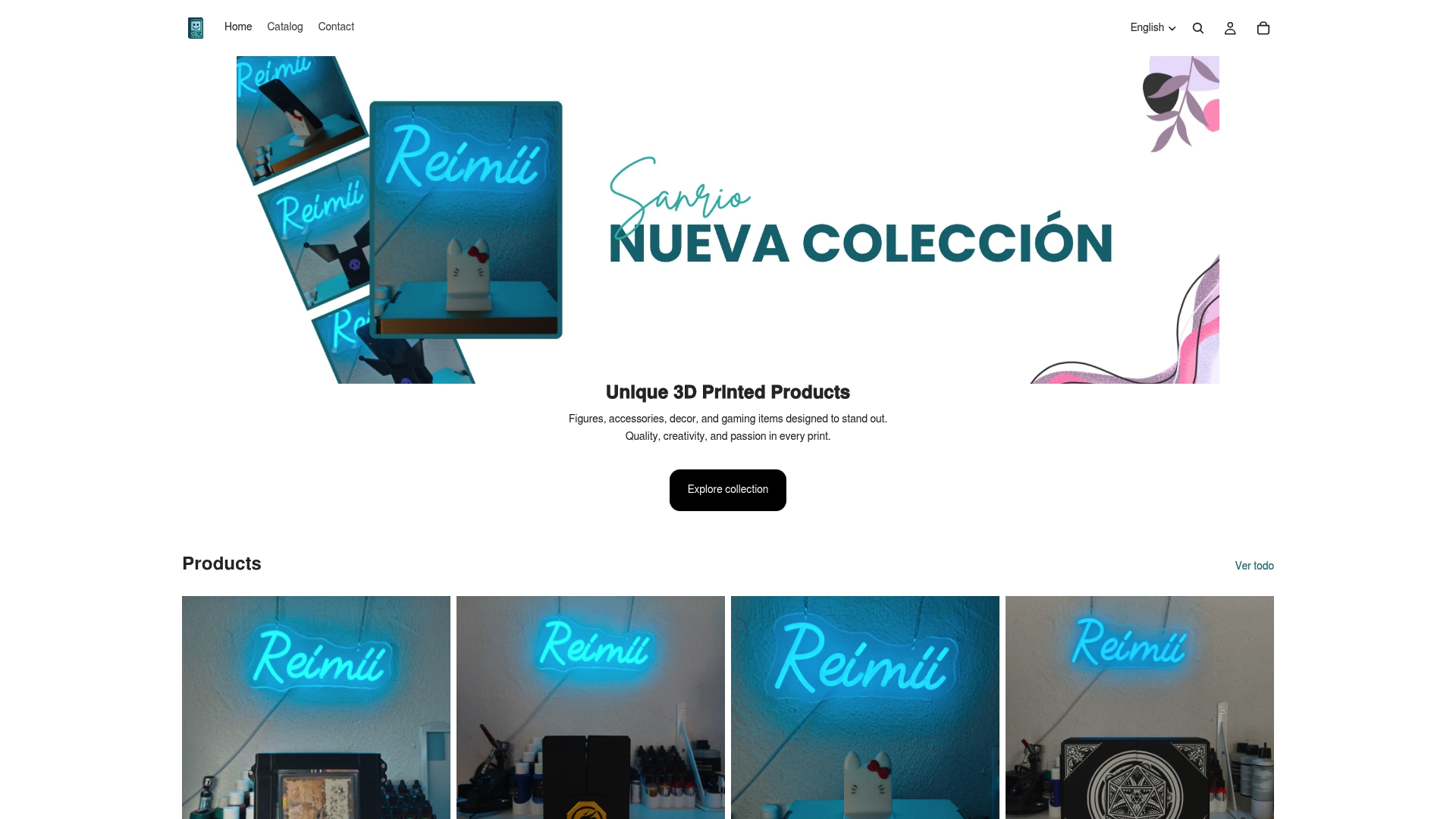
Reimii specializes in 3D printed figures and accessories for collectors and players, with a clear focus on detail, customization, and professional finish. From board game organizers to themed figures for gaming and RPGs, each piece reflects what happens when print quality combines with user-focused design. You can explore the full range at Reimii or go directly to the gaming and RPG figures collection if you’re looking for miniatures and accessories for your games. You’ll also find organizers and boxes for collectors who want order without sacrificing style.
Frequently Asked Questions
How is the price of a 3D printed figure calculated?
The price results from adding the cost of material, electricity, equipment depreciation, and an hourly labor rate (between 15 and 20 euros per hour). To that total, a margin of 5 to 10% is added to cover reprints and errors.
How much is a 3D printed miniature worth?
A 28mm RPG miniature costs between 0.50 and 1.50 euros to produce and is usually sold between 8 and 15 euros, with a gross margin of 60 to 75% depending on finish and sales channel.
Which platforms are best for selling 3D printed figures?
Etsy is the preferred option for exclusive and customized pieces with high margins. Mercado Libre works better for higher volume productions where competitive pricing is the main variable.
Which 3D figure niche has the highest demand in 2026?
Miniatures for wargames and RPGs, custom figures, and board game accessories are the niches with the highest documented profitability. Exclusivity and detail are the factors that most increase the perceived price.
Why shouldn’t I price based only on filament cost?
Because filament represents only a fraction of the real cost. Excluding electricity, labor time, equipment depreciation, and error margin, the resulting price does not cover the actual production expenses and makes any long-term sales activity unsustainable.
Comentarios
Todavia no hay comentarios.