

The best ways to display collectible figures combine active protection, visual organization, and practical access in one system. Properly displaying is not just placing pieces on a shelf. It involves controlling light, humidity, dust, and thematic arrangement so that each figure retains its value and looks its best. In this guide, you will find the most effective methods to present collectible figures, from LED-lit display cases to 3D-printed modular organizers, with conservation criteria used by museums themselves.
1. Closed display cases with LED lighting
Closed display cases are the most protective exhibition method available for collectors. They block dust, reduce accidental physical contact, and allow control of the interior microclimate. The key is to combine them with low-intensity LED lighting, which produces brightness without generating heat and prevents yellowing of plastic and acrylic materials.
Display cases with tempered glass or acrylic doors are the most recommended because they allow full visibility without exposing the figures. Models with integrated LED lighting at the top or side distribute light evenly and enhance the details of each piece. Avoid placing the display case in front of windows with direct sunlight, as even glass only filters part of the ultraviolet spectrum.
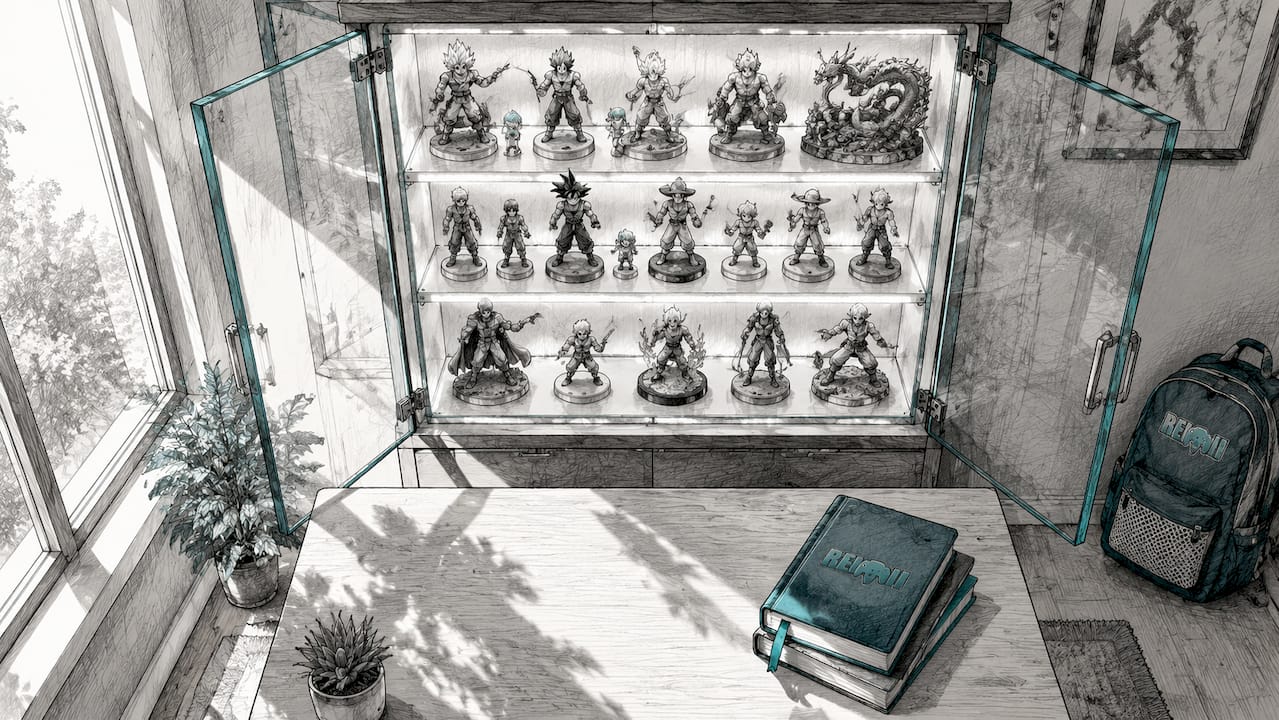
Professional tip: Place an adjustable LED strip at the top inside of the display case and set it to 40-60% intensity. This creates visual depth without saturating colors or damaging materials.
2. Open shelves organized by zones
Open shelves offer immediate access to each figure and allow the collection to be rearranged without restrictions. They are the preferred option when displaying large collections with frequent rotation. Their main limitation is dust accumulation, which requires more frequent cleaning than closed systems.
To maximize visual impact, divide the shelf into themed zones: one section for figures from a franchise, another for artistic sculptures, and another for limited editions. This segmentation turns the shelf into a coherent visual narrative. Shelves with a dark-colored or textured paper background create contrast and make the figures stand out without the need for additional lighting.
3. Custom acrylic displays
Custom acrylic displays are the most versatile solution for presenting individual figures or small groups precisely. They are made to measure according to each piece’s size and shape, eliminating the problem of figures not fitting standard displays. Their full transparency allows viewing the figure from any angle without visual distractions.
Acrylic display cases with lids protect against dust without sacrificing visibility. Dome-shaped models are ideal for unique or high-value figures. For collections of small figures, tiered displays allow showing multiple pieces in depth without blocking each other.
4. 3D modular organizers for small spaces
Organizing a figure collection in a small space requires solutions that take advantage of verticality and modularity. 3D-printed modular organizers with adjustable compartments solve this problem with detachable designs that fit different figure sizes. You can stack modules upward instead of expanding horizontally, multiplying capacity without taking up more surface area.
This system is especially useful for collections of tabletop game miniatures, Funko Pop figures, or anime statuettes. Each compartment can be visually labeled with the series name or edition number. The modularity also allows rearranging the layout as the collection grows or changes focus.
Professional tip: Use neutral-colored modules or ones matching the wall tone so the figures become the visual focus. Brightly colored organizers compete with the pieces themselves.
5. Thematic grouping for visual coherence
Arranging collectible figures by coherent theme transforms a pile of pieces into a display with a narrative intention. Grouping by universe (Marvel, Star Wars, Dragon Ball), by material (resin, PVC, metal), or by acquisition period creates visual paths that the eye naturally follows. Museums use this technique to guide visitors' attention without explicit signage.
To implement it, start by separating your collection into broad categories and then refine within each one. Larger figures go at the back or on the top; smaller ones go in front or on lower levels. This principle of stepped depth prevents large pieces from hiding smaller ones and gives a sense of order even in large collections.
6. Environmental control: light, humidity, and temperature
The conservation of collectible figures depends directly on controlling the environment of the display space. The ideal relative humidity is between 40% and 55%, and fluctuations outside this range cause damage to plastics, paints, and composite materials. A digital hygrometer placed inside or near the display case allows effortless monitoring of this parameter.
The environmental factors that most damage figures are:
- Direct sunlight: fades paints and weakens plastics within weeks.
- High humidity: promotes mold growth on porous materials.
- Excessive heat: deforms PVC and soft resin figures.
- Accumulated dust: acts as an abrasive during cleaning if not regularly removed.
“Light and microclimate are part of the display design. Controlling these factors maximizes conservation along with aesthetics.” Maestro Virtuale
7. Rotation of light-sensitive pieces
The periodic rotation of figures exposed to light is a standard practice in museography that private collectors rarely apply. Pieces with watercolor paints, textile materials, or matte finishes are especially vulnerable to cumulative light exposure. Rotating figures every two or three months limits damage without needing to store them permanently.
Damage from cumulative light exposure cannot be reversed by cleaning. Once the color fades or the plastic yellows, the deterioration is permanent. That’s why the most valuable or rare pieces should be displayed in areas with less light exposure and rotated more frequently than mass-produced figures.
8. Stable bases and anti-tip fixation
A fallen figure is a damaged figure. Unstable bases are the most common cause of breakage in home collections, especially in homes with children, pets, or seismic zones. Acrylic bases weighted at the bottom or stainless steel supports with adjustable screws offer stability without altering the display’s aesthetics.
For large figures or those with high centers of gravity, wall mounts with anchors are the safest solution. Silicone anti-slip strips placed under the figure’s base also reduce the risk of movement on shelves without modifying the piece. This measure is especially relevant on floating shelves, where environmental vibrations can shift figures over time.
9. Digital cataloging of the collection
Cataloging with digital systems becomes necessary when the collection exceeds 75 to 150 pieces, the point at which manual management loses efficiency. A digital record per piece should include photo, name, series, condition, estimated value, and physical location within the display. This record allows locating any figure in seconds and facilitates insurance or loan management.
| Tool | Advantages | Limitations |
|---|---|---|
| Spreadsheet (Excel, Google Sheets) | Free, flexible, no learning curve | No integrated photos, hard to scale |
| Specialized app (Art2App, Collectibles) | Photos, location, valuation all in one place | Requires initial setup time |
| Record generator (Geeksonas) | Complete record in under a minute | Less control over custom fields |
The most valuable data in any cataloging system is the combination of location and condition of each piece. Knowing where it is and its condition saves time in daily maintenance and prevents losses in collections that occupy multiple spaces or rooms.
Professional tip: Photograph each figure against a white background with diffused natural light before cataloging it. This reference photo serves both for inventory and to compare the condition of the piece in the future.
For collections shared on social media or presented to potential buyers, knowing how to value 3D printed figures in the current market is as important as keeping the inventory updated.
Key points
The most effective ways to display collectible figures combine environmental protection, thematic organization, and digital cataloging to preserve the value of each piece long-term.
| Point | Details |
|---|---|
| Display cases with LED | Use low-intensity LED lighting to protect materials and improve visibility. |
| Controlled humidity | Keep relative humidity between 40% and 55% to prevent damage from mold or dryness. |
| Thematic organization | Group figures by series or universe to create visual coherence and facilitate access. |
| Periodic rotation | Rotate the most sensitive pieces every two to three months to limit cumulative light damage. |
| Digital cataloging | Record the location and condition of each piece from 75 units onward to manage the collection efficiently. |
What no one tells you about displaying collectible figures
I’ve been observing collections of all kinds for years, and the most common mistake isn’t lack of space or limited budget. It’s displaying without conservation criteria. Most collectors place their figures where they look good visually and don’t think about them again until they notice a piece has lost color or become deformed.
What really makes a difference is treating the display as a living system. That means checking humidity once a month, rotating the most exposed pieces each season, and updating the digital inventory every time a new piece arrives. It sounds like extra work, but in practice it’s 15 minutes a month that can save the value of pieces costing hundreds of euros.
Another underestimated point is lighting. I’ve seen flawless collections ruined by a poorly placed halogen spotlight. Heat-free LED lighting is not a luxury. It’s the difference between a collection that lasts decades and one that ages poorly in just a few years.
My recommendation for beginners: don’t invest in the most expensive display case before understanding what type of figures you have and how they react to light and humidity. Start with a modular organizer, an inexpensive hygrometer, and a spreadsheet. When you exceed 75 pieces, make the jump to a digital system. Gradual organization is more sustainable than trying to set up the perfect system from day one.
— Marina
Reimii Display Cases and Organizers for Your Collection
If you are looking for solutions designed specifically for collectors, Reimii manufactures 3D printed display cases and organizers that combine functionality and custom design. Each product is tailored to the size and type of figure, from tabletop game miniatures to large-format statuettes.
The most popular Reimii products include modular organizers with adjustable compartments, anti-tip bases, and display cases with finishes that complement any showcase. If you want to enhance your display with pieces that reflect your personal style, explore the current catalog and discover the options available for your collection.
FAQ
What is the best method to display figures in limited space?
3D modular organizers with adjustable compartments are the most efficient solution for small spaces because they utilize vertical space and adapt to different figure sizes without taking up more horizontal surface.
What humidity is suitable for preserving collectible figures?
The ideal relative humidity is between 40% and 55%. Fluctuations outside this range irreversibly damage plastics, paints, and composite materials.
When should I start digitally cataloging my collection?
Digital cataloging becomes necessary when the collection exceeds between 75 and 150 pieces, at which point manual management loses efficiency and the risk of losing track of the condition and location of each figure increases.
Is it necessary to rotate figures in a display case?
Yes. Pieces with water-based paints or matte finishes should be rotated every two to three months to limit cumulative light damage, which cannot be reversed by cleaning once deterioration has started.
Do acrylic display cases protect figures well?
Acrylic display cases with lids protect against dust and physical contact but should be combined with low-intensity LED lighting and placed away from direct sunlight to prevent yellowing of the material and the figures.
0 comments