

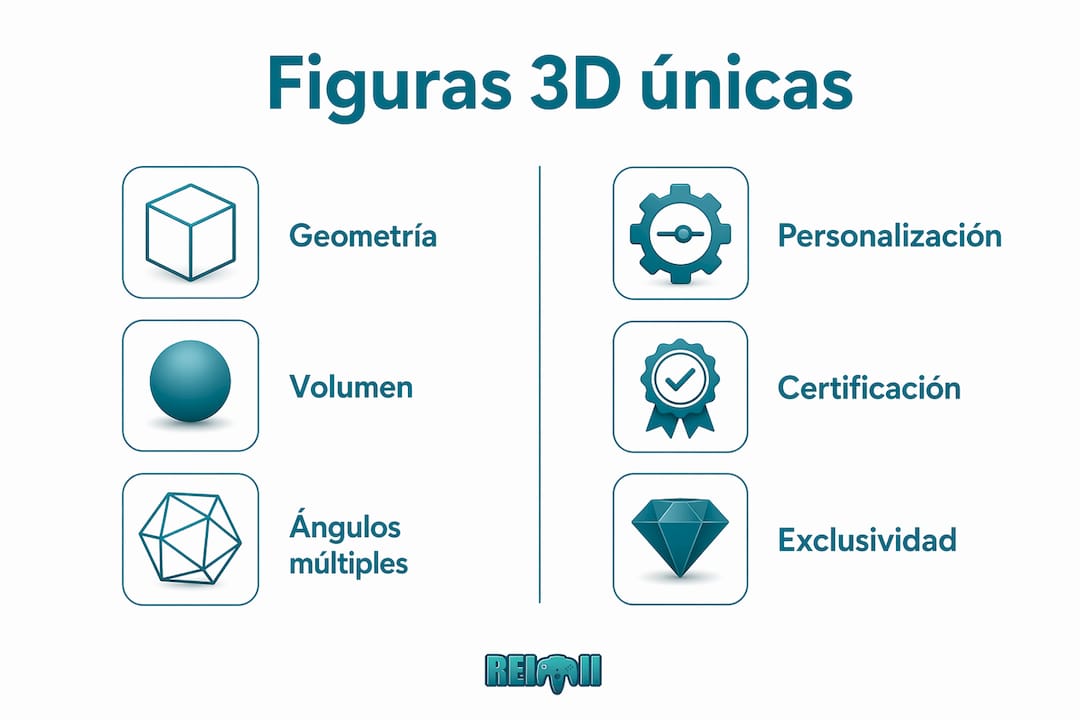
Three-dimensional figures are unique because they combine physical volume, precise customization, and authorship certification in an object that no flat reproduction can match. Unlike a printed image or a digital illustration, a 3D figure occupies real space, can be viewed from all angles, and carries a verifiable manufacturing history. Understanding why 3D figures are unique involves looking at three dimensions at once: the geometry that defines them, the technology that creates them, and the market systems that turn them into collectible pieces with lasting value.
What geometric features make three-dimensional figures unique?
A three-dimensional figure is defined by having three measurable dimensions: length, width, and height. This gives it volume and multiple viewing angles that a flat image cannot offer. Its faces, edges, and vertices form a structure that occupies real physical space, making each piece an object with tangible presence. That presence is the primary reason why 3D figures generate a completely different visual and tactile experience.
The comparison with 2D figures clearly shows the qualitative leap. An illustration of a dragon on paper shows a fixed perspective. A 3D figure of the same dragon allows you to rotate it, illuminate it from different angles, and discover details that only exist in three-dimensional space, such as the texture of the scales on the back or the curvature of the tail seen from below. That richness of visual information is impossible to compress into two dimensions.
| Feature | 2D figure | 3D figure |
|---|---|---|
| Dimensions | Length and width | Length, width, and height |
| Viewing angles | One fixed | Unlimited |
| Physical texture | Not applicable | Present and tangible |
| Visual impact | Flat representation | Real spatial presence |
| Artistic value | Illustration or print | Sculpture or unique piece |
Professional tip: When evaluating a 3D figure, rotate it under a direct light source. The details that appear in shadowed areas are the clearest proof of its technical quality and the real depth of the modeling.
How do customization and digital manufacturing bring exclusivity?
3D printing transforms a digital file into a physical object layer by layer, allowing the production of figures with a level of detail impossible for traditional industrial molds. Laser scanning and photogrammetry technologies capture shape and surface with high documentary accuracy, generating digital models that can be faithfully reproduced or modified to create unique variants. This means that each figure can literally be one of a kind if the designer so decides.
Exclusivity in 3D figures is built through several concrete mechanisms:
- Numbered runs: producing only 50, 100, or 288 units of a model turns each piece into an object with verifiable scarcity.
- Individual customization: adjusting colors, textures, or design elements for a specific buyer ensures no figure is identical to another.
- Subscription editions: models like the official Iron Maiden collection, with 50 statuettes approximately 13 cm tall at €14.99 each and scheduled deliveries, create anticipation and cumulative value.
- Handcrafted finishes: hand painting, aging, or varnishing add a layer of human work that no algorithm can exactly duplicate.
- Protected files: limiting access to the original digital model prevents third parties from reproducing the figure without authorization.
The difference from mass industrial productions is structural. A factory produces thousands of identical figures with the same mold. Digital manufacturing allows each piece to be an independent creative decision.
Professional tip: If you order a custom figure, always ask for the number of units produced with that exact model and request that it be recorded on the purchase certificate. That data is the anchor of its future value.
What role does digital certification play in the authenticity of a 3D figure?
Digital provenance is the set of verifiable data that shows who created a figure, when, and under what conditions. Without that trace, two visually identical figures have the same value. With it, one can be worth ten times more than the other. Systems like MotionPrint use Ed25519 cryptographic signatures to certify the authorship of 3D creations, generating reports with QR codes that any buyer can independently verify. This shifts trust from the seller to the technical system.
The certification process works in four steps:
- The creator registers the original 3D file in the certification system at the moment of its creation.
- The system generates a unique cryptographic signature linked to that file and the author's identity.
- Each produced figure receives a certificate with a QR code linking to that public signature.
- The buyer scans the QR code and verifies in real time that the figure corresponds to the registered original.
Traceability and security in 3D files is not just a technical issue. The UK's National Composites Centre has validated that workflows with audit trails measurably increase the final buyer's confidence. For a collector, knowing their figure has a verifiable digital chain of custody is as important as its physical appearance.
Verifiable provenance displaces physical appearance as the main factor of uniqueness. A figure without certification can be beautiful. A figure with certification is authentic, and that difference defines its value in the secondary market. Learning to identify replicas of 3D printed figures is a skill every serious collector needs to develop.
What market factors turn 3D figures into valuable pieces?
The value of a 3D figure in the collectible market depends not only on its technical quality. It depends on how many exist, who made them, and the story behind them. Managed scarcity through limited runs and numbering is the most effective mechanism to anchor price and rarity in a way understandable to the buyer. Lladró and other brands use these systems with surgical precision.
The most extreme and revealing case is the Pikachu & Eevee figure by Lladró: only 288 units produced, over 1,000 hours of manual work, details made petal by petal, and a price of 5,000 euros. That price does not reflect the cost of the material. It reflects the sum of scarcity, craftsmanship, and brand storytelling. No mass printing can compete with that.
| Exclusivity strategy | Example | Impact on value |
|---|---|---|
| Numbered edition | Lladró Pikachu (288 units) | Very high anchor price |
| Staggered subscription | Iron Maiden (50 figures) | Sustained demand over time |
| Intensive handcrafted work | More than 1,000 hours per piece | Justifies premium price |
| Digital certification | Ed25519 signatures with QR | Trust in the secondary market |
| Individual personalization | Custom figures | Absolute uniqueness by definition |
Modern collecting combines digital technologies with market strategies like subscriptions and staggered releases to maintain exclusivity and demand simultaneously. This is no coincidence. It is a business model designed so that each figure has a narrative context that reinforces its perceived value. Understanding how to value 3D figures in the market requires reading both the piece and its commercial history.
Why does collecting 3D figures have emotional and cultural significance?
A well-made 3D figure is not just a decorative object. It is a cultural document. High-resolution scanning records texture, condition, and geometry at a specific moment in time, allowing monitoring of deterioration, virtual reconstruction of damaged pieces, and creation of facsimiles that preserve historical information without touching the original. This documentary capacity makes 3D figures objects with value beyond aesthetics.
For the individual collector, emotional meaning is built differently. A personalized figure with the features of a loved one, the colors of a favorite team, or the details of a character that marked childhood carries an emotional weight that no catalog product can replicate. That personalization is, in itself, a form of uniqueness.
Some practical tips for properly preserving and displaying 3D figures:
- Keep figures away from direct sunlight to avoid discoloration in PLA or resin materials.
- Use display cases with closures to reduce dust accumulation on textured surfaces.
- Learn how to properly light your display case with cool LED light to highlight details without generating heat.
- Keep the certificates of authenticity with the figure, not separately.
- Photograph each piece from multiple angles upon receiving it to have a record of its original condition.
Professional tip: Resin figures are more sensitive to temperature changes than PLA ones. If you live in an area with hot summers, avoid displaying them near south-facing windows.
Key points
3D figures are unique because they integrate three-dimensional geometry, custom manufacturing, digital certification, and controlled scarcity into a single object with artistic, technical, and collectible value.
| Point | Details |
|---|---|
| Three-dimensional geometry | Volume and multiple angles create a visual experience impossible in 2D. |
| Digital customization | 3D printing allows producing unique pieces or precisely numbered runs. |
| Authorship certification | Cryptographic signatures like Ed25519 verify provenance and protect value. |
| Managed scarcity | Limited runs like those from Lladró or Iron Maiden anchor price and rarity. |
| Documentary value | 3D scanning preserves historical and cultural information that no copy can replace. |
What years of observing this market have taught me
I’ve been following the evolution of 3D figures from the perspective of collecting and technology for a while, and there’s something most articles on this topic don’t clearly say: the real battle isn’t between 3D figures and industrial figures. It’s between objects with verifiable history and objects without it.
When Lladró releases 288 units of a Pikachu at 5,000 euros, they’re not selling porcelain. They’re selling a scarcity argument so well constructed that the price holds on its own. When MotionPrint certifies an animation with Ed25519, it’s doing the same in the digital realm. Both systems address the same issue: in a world where anyone can print a figure at home, uniqueness doesn’t come from the object but from what surrounds it.
What I find most interesting, and also most underestimated, is the documentary value. The ability to scan a piece in high resolution and preserve its exact condition at a specific moment turns 3D figures into living archives. This has no equivalent in any other form of mass collecting.
My advice for any collector just starting out: don’t buy figures without certification. Not because uncertified ones are bad, but because in five years the secondary market will heavily reward those who have verifiable documentation. The technology already exists. It just needs buyers to demand it.
— Marina
Unique and Custom 3D Figures with Reimii
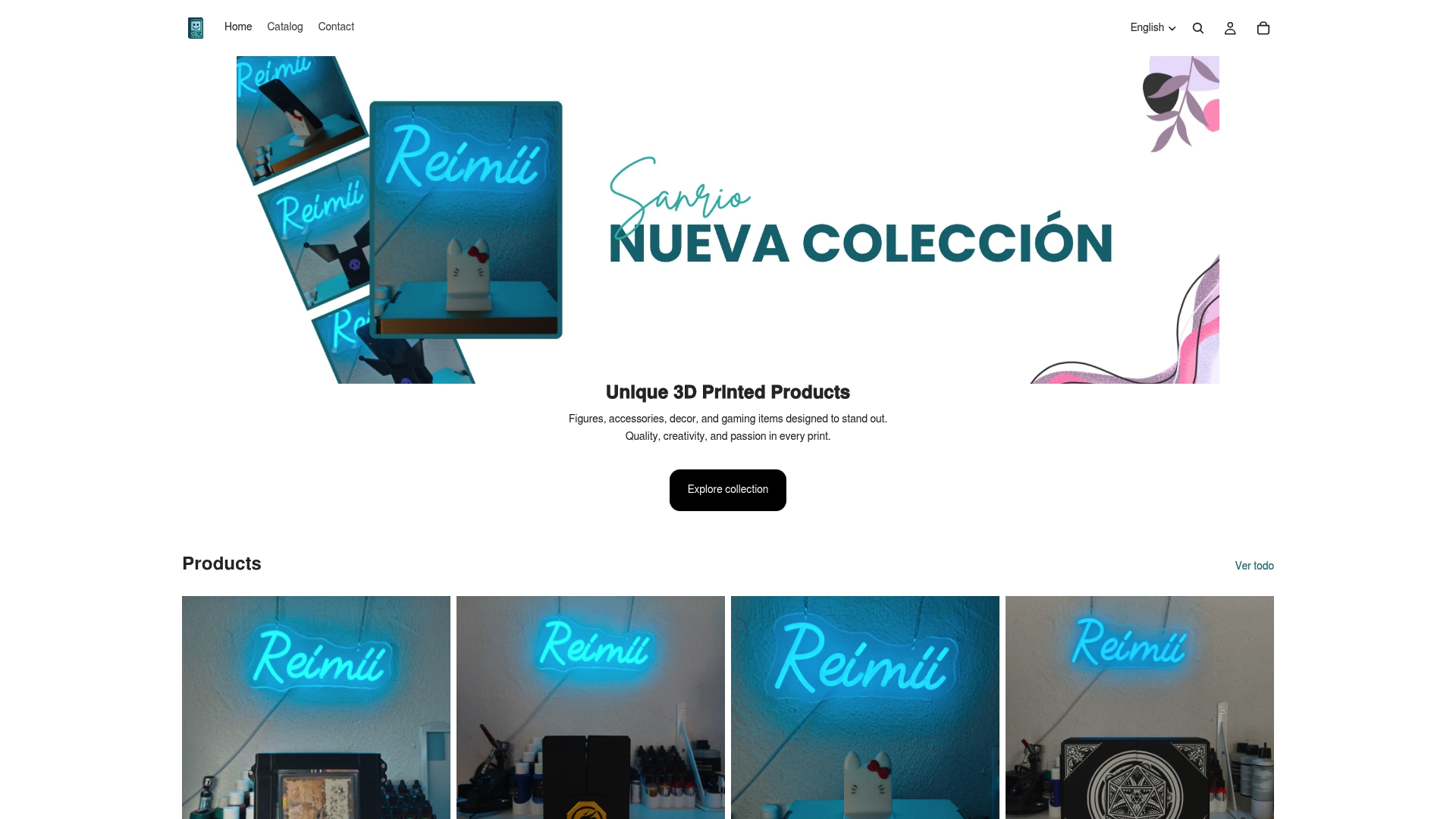
Reimii designs and produces custom 3D figures with attention to detail that makes the difference between a generic piece and your own. Each product combines precision printing technology with a creative approach that reflects the style of the person who commissions it. If you’re looking for a figure that is truly one of a kind, whether to collect, gift, or decorate, the most popular Reimii products are the most direct starting point. You’ll also find 3D printed accessories for card games, like the compact Deck Box for MTG, which shows how 3D technology is applied with functionality and unique design.
FAQ
What Makes a 3D Figure Unique Compared to a Flat Figure?
A 3D figure has volume, faces, edges, and vertices that allow it to be viewed from multiple angles, something impossible in a flat representation. This three-dimensionality creates a completely different visual and tactile experience.
How Is the Authenticity of a 3D Figure Certified?
Systems like MotionPrint use Ed25519 cryptographic signatures and QR codes to link each figure to its original file and author. The buyer can independently verify this information in real time.
Why Do Limited Editions of 3D Figures Cost More?
Managed scarcity, like the 288 units of the Pikachu & Eevee figure by Lladró, creates verifiable rarity that anchors the price in the collectible market. The fewer the units and the more handcrafted the work, the higher the perceived and real value.
What Technologies Are Used to Create High-Precision 3D Figures?
Laser scanning and photogrammetry capture shape and surface with high resolution, generating digital models that are printed layer by layer. These technologies allow reproducing details that traditional industrial molds cannot achieve.
How Do I Properly Preserve a 3D Collectible Figure?
Keep figures away from direct sunlight and in closed display cases to protect the material and painted details. Always keep the certificate of authenticity with the piece, as that document is part of its value.
0 comments