


Generative design in 3D printing is not an aesthetic trend. It is a profound change in how physical parts are conceived: instead of a designer drawing every curve manually, an algorithm explores millions of possible configurations and selects those that best meet the defined parameters. If you work with advanced 3D printing and still don’t integrate this methodology into your workflow, you are leaving real advantages in weight, strength, material consumption, and customization on the table.
Table of contents
- Key points
- What generative design in 3D printing is and how it works
- Tools and Software for 3D Generative Design
- Practical applications of generative design
- Technical challenges and best practices
- My perspective on generative design today
- Explore generative design with Reimii
- FAQ
Key points
| Point | Details |
|---|---|
| What generative design is | An algorithmic process that automatically generates and optimizes geometries according to load, material, and constraint parameters. |
| Advantage over manual design | Allows exploring structural solutions that a human designer would never produce in the available time. |
| Key tools | Autodesk Fusion 360 and nTopology integrate simulation and generation directly linked to 3D printing. |
| Main risk | Without rigorous physical simulation, most generative designs produced by AI are not structurally viable. |
| Real commercial application | From personalized medical implants to high-precision organizers, generative design defines unique parts manufacturable on demand. |
What generative design in 3D printing is and how it works
Generative design is a computer-aided design method in which the designer defines goals and constraints, and an algorithm, usually supported by artificial intelligence, explores millions of alternatives to find the optimal geometry. It is not about the machine “guessing” a pretty shape. It is computational engineering applied to real manufacturing.
The parameters that feed this process include the mechanical loads the part will bear, the materials available for printing, the anchor points, and the areas where no material can exist. With this data, the software generates structures that efficiently distribute stress, eliminating everything that does not contribute functional strength.
The most distinctive visual result is geometries that mimic patterns found in nature: bone trabeculae, tree branches, vein networks. This is no coincidence. These structures reduce filament consumption and printing times compared to solid designs, while maximizing strength per unit of weight. Biomimicry in 3D generative design is not decoration. It is applied physics.
What sets generative design apart from traditional parametric design goes beyond speed. Generative design surpasses parametric modeling by automating complex data correlations and learning from previous iterations to produce increasingly efficient solutions. A human designer optimizes one geometry. A generative system simultaneously explores hundreds of different geometry families.
- Multi-objective optimization: you can set minimum weight, maximum stiffness, and minimum material cost all at once.
- Accelerated iterations: you get results in hours that manual design would take weeks of engineering to achieve.
- Non-intuitive geometries: optimal solutions are often shapes no human designer would have considered.
- Additive manufacturing compatibility: the generated structures take advantage of the formal freedom of 3D printing, impossible to manufacture with subtractive methods.
Pro tip: Always define load points and structural supports before starting the generative process. If the force model is poorly defined from the start, the algorithm will precisely optimize the wrong geometry.
Tools and Software for 3D Generative Design
Knowing what generative design in 3D printing is is the first step. Knowing which tools to use efficiently is what makes the difference between a failed prototype and a manufacturable part.
Autodesk Fusion 360 and nTopology are the go-to platforms for those combining generative design with additive manufacturing. Fusion 360 integrates the generative module directly within the CAD environment, allowing you to move from load analysis to optimized geometry without switching software. nTopology goes further: it works with implicit fields that represent complex geometries with lightweight files, and its finite element simulations validate the part before sending it to print.
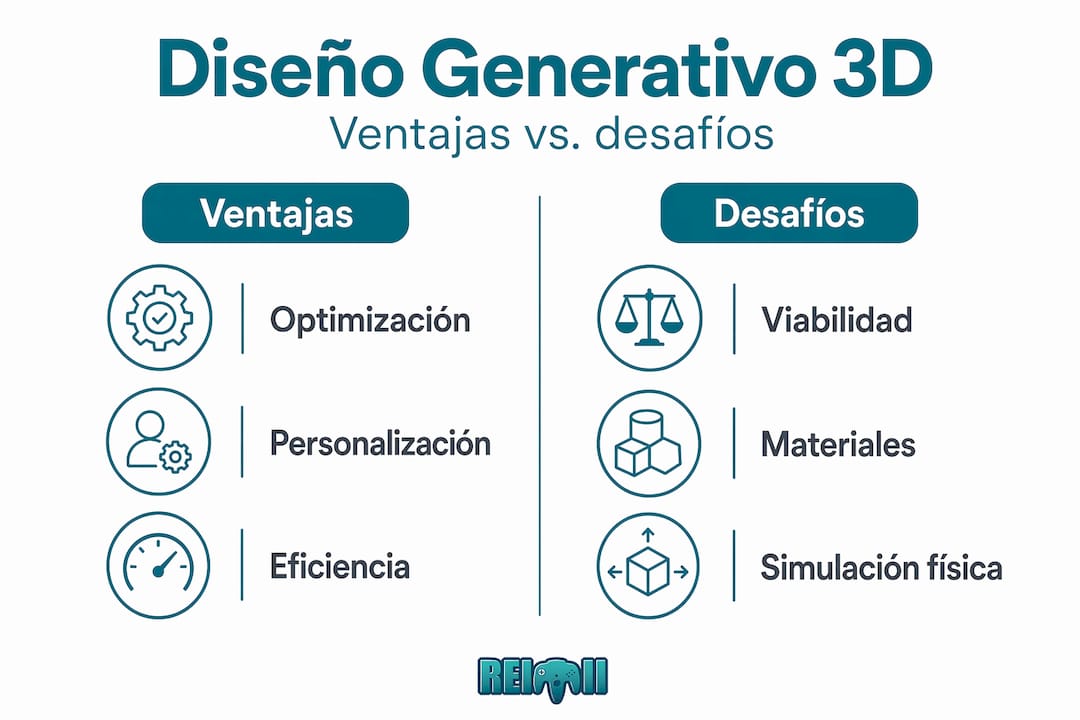
Both platforms share a decisive feature for advanced 3D printing: the workflow goes from direct algorithmic analysis to printing without manual redesign. This eliminates the usual bottleneck where an engineer receives a generative proposal and must manually reinterpret it in CAD before processing it in the slicer.
Some technical aspects you should consider when choosing your software:
- Interoperability with slicers: ensure the software exports to formats compatible with your printing software. Not all mesh generators produce files that slicers can process without errors.
- Integrated structural simulation: validation within the same environment prevents errors from exporting and data loss between platforms.
- Support for advanced formats: the 3MF format surpasses STL by including color, textures, and metadata in a single file, which is especially relevant for multicolor projects or those with multiple material requirements.
The industry standard is clearly evolving towards 3MF. If your current pipeline relies solely on STL, it’s time to update that link.
Practical applications of generative design
Seeing the benefits of generative design on paper is one thing. Understanding where it generates real and measurable advantages is another. These are the sectors where the impact is concrete and documented.
-
Bioengineering and personalized implants. Generative design in 3D printing allows the creation of implants tailored to the exact anatomy of each patient. A current example is the CaroFlex implant, a 3D-printed elastic solution for arteries that integrates anatomical flexibility to reduce blood pressure. The geometry of this type of device is impossible to produce with conventional manufacturing.
-
Aerospace and automotive industry. Support parts, engine mounts, and structural components produced with generative design techniques weigh up to 40% less than their manually designed equivalents, while meeting or exceeding strength requirements. This is not a marginal improvement. In aviation, every kilogram reduced translates into cumulative fuel savings.
-
Sustainability and circular economy. Generative additive printing manufactures only what is necessary, eliminates manufacturing byproducts, and enables on-demand production without physical inventory. For manufacturers committed to sustainability, this model reduces waste and extends the lifespan of industrial products through spare parts made exactly when needed.
-
Mass customization and unique products. The combination of generative design with additive manufacturing allows producing unique objects at a cost similar to a standard part. Customized boxes, ergonomic supports, organizers adapted to specific dimensions. Products that reflect individual needs without penalizing price or delivery time.
“Generative design does not replace the designer. It amplifies their ability to explore solutions that would otherwise be beyond the reach of any reasonable manual iteration.”
Technical challenges and best practices
Understanding the real challenges of generative design in 3D printing will save you time and materials. The biggest mistake designers new to this methodology make is confusing visually organic geometry with guaranteed structural functionality.
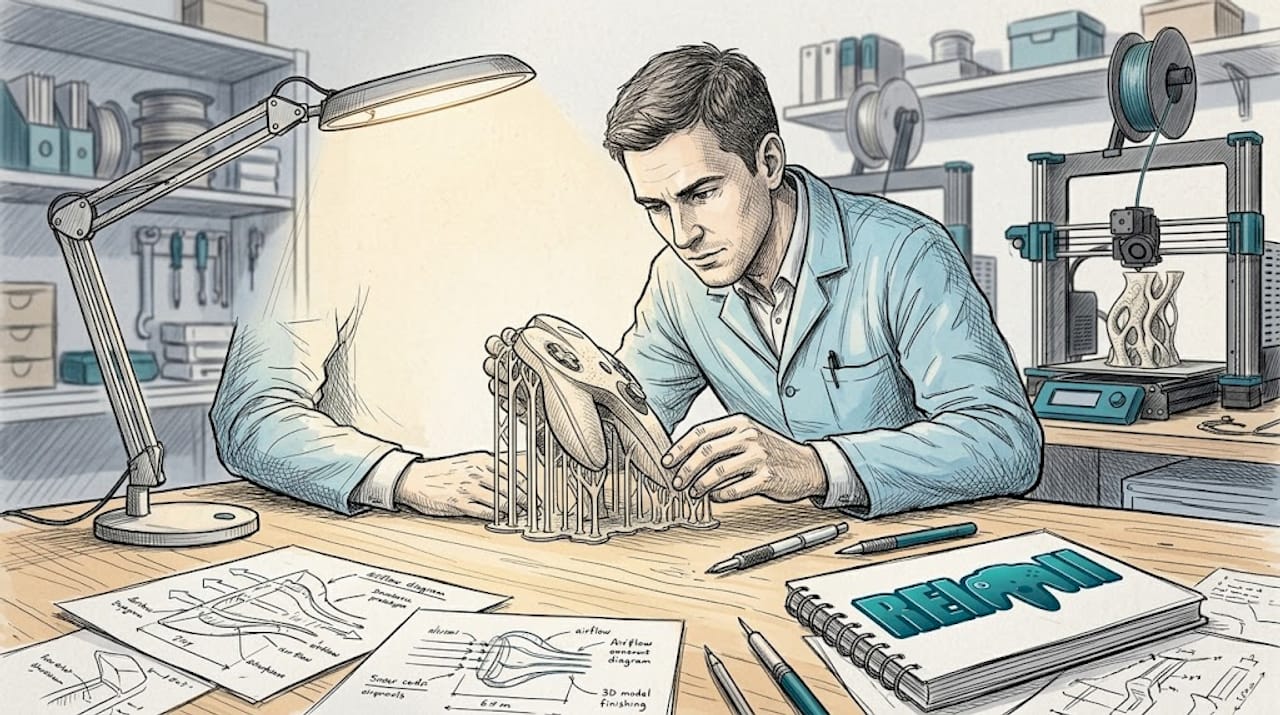
The data is clear: only 26% of models stylized by generative AI without physical simulation are structurally viable. Three out of four generative-looking parts produced without mechanical validation fail under real load. Continuous simulation, with finite elements and adaptive mechanical analysis during the process, is not optional. It is the difference between a printable object and one that fractures on the first test.
| Practical | Traditional STL | 3MF with metadata |
|---|---|---|
| Color and texture support | No | Yes |
| Material information | No | Yes |
| Multicolor printing compatibility | Limited | Native |
| File size for complex geometries | Higher | Lower |
| Recommended for advanced generative design | No | Yes |
Beyond formats, there are specific practices that determine whether a generative design will reach the printer in optimal conditions:
First, never neglect printability analysis. Generative geometries often produce extreme overhangs, ultra-thin walls, or closed cavities that trap support material. Reviewing the design in the slicer before approving the final print avoids costly surprises.
Second, choose the material based on mechanical requirements, not availability. For functional parts with generative design, technical materials like PETG, PA12, or carbon fiber composites offer the combination of stiffness and dimensional tolerance that these complex geometries demand.
Pro tip: When using generative software with integrated simulation, enable manufacturability checks along with structural analysis. Some modules allow restricting the process to avoid geometries that the slicer itself cannot process correctly.
My perspective on generative design today
I’ve seen many designers embrace generative design for the wrong reasons. The organic aesthetics impress in renders, but what really transforms the work is the optimization logic behind it. When I first started exploring this methodology, I made the classic mistake: generating shapes without subjecting them to simulation, printing them, and discovering the part looked perfect but had the strength of a cookie.
What I find most valuable today, in hindsight, is that generative design redefines the economics of customization. You don’t just make lighter parts. You produce objects that previously existed only as concepts because manufacturing them otherwise was prohibitive.
My warning for beginners: don’t underestimate the software learning curve. Fusion 360 has powerful generative modules, but they require you to understand basic structural mechanics before interpreting the results correctly. The tool amplifies your knowledge. It doesn’t replace it.
The future of advanced 3D printing lies in the integration of generative design, simulation, and manufacturing as a continuous cycle. Designers who master the entire chain, not just the visual part, will define the products of the next industrial cycle.
— Marina
Explore generative design with Reimii
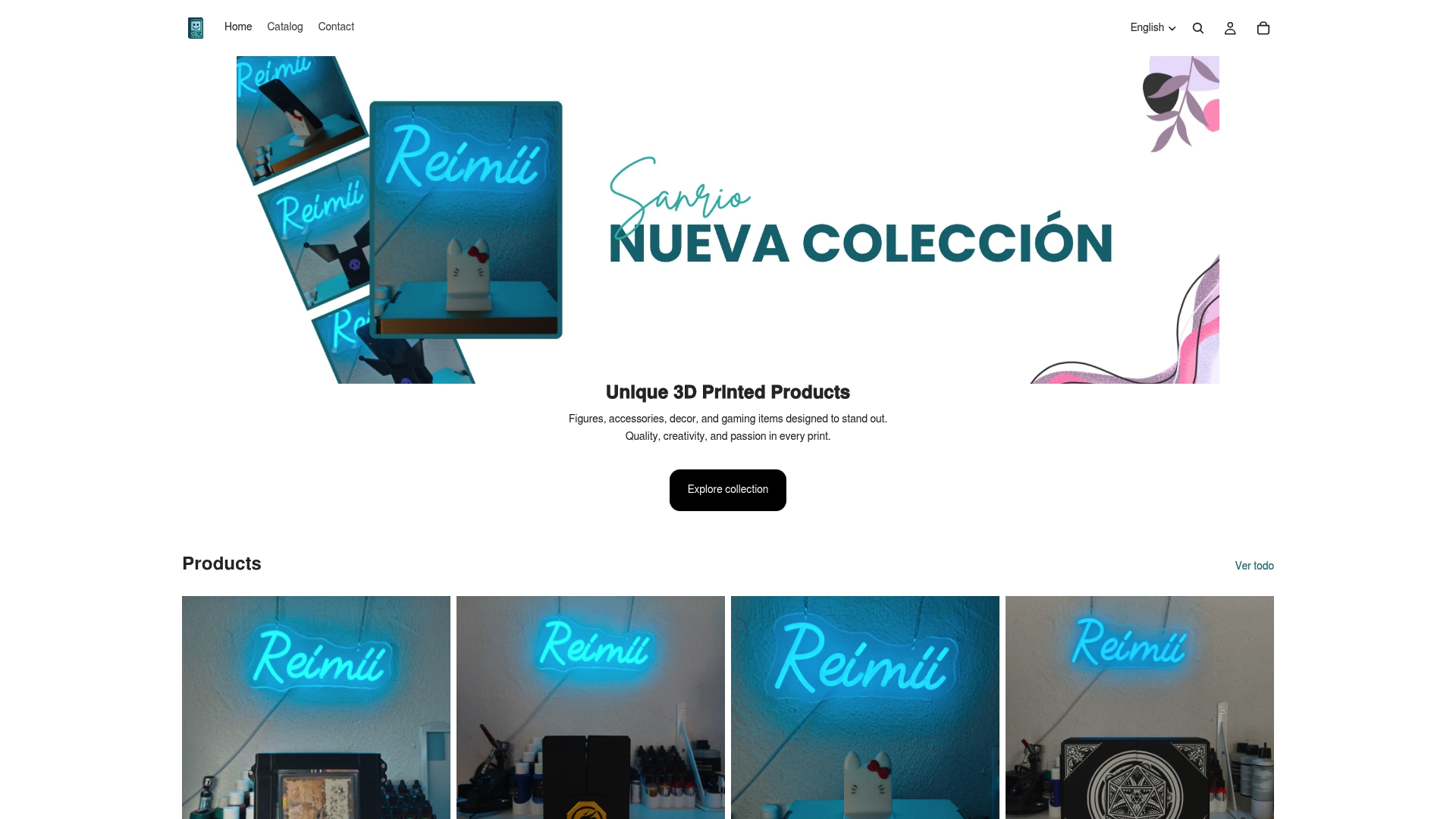
At Reimii, we know that interest in generative design doesn’t end with theory. If you want to see how this methodology translates into 3D printed products with real quality, proven functionality, and standout design, Reimii’s catalog is the right starting point. From custom organizers and boxes to supports with optimized geometry, each piece combines the principles of advanced 3D design with on-demand manufacturing. Visit Reimii to explore products that demonstrate in practice what generative design makes possible. If you’re also interested in understanding how this approach applies to collectible items, the guide on 3D printed card boxes shows exactly that process.
FAQ
What is generative design in 3D printing?
It is a process where artificial intelligence algorithms generate optimized geometries based on load parameters, material, and manufacturing constraints. The result is parts that are lighter and stronger than equivalent manual designs.
What software do I use for 3D generative design?
Autodesk Fusion 360 and nTopology are industry standards. Both integrate structural simulation with the generative process and export directly to formats compatible with advanced 3D printers.
Does generative design work with any 3D printer?
Generative geometries work best with printers that offer high resolution and support for technical materials. Desktop FDM printers can print generative designs, but very complex geometries benefit from technologies like SLS or high-resolution resin.
Why does a generative part fail if it looks well designed visually?
Because organic aesthetics do not guarantee structural viability. Only 26% of AI-generated models without physical simulation are mechanically functional. Validation with finite elements before printing is essential.
Which file format is best for generative designs?
The 3MF format is recommended for advanced 3D printing. It includes material, color, and texture metadata in a single file, overcoming the limitations of STL for projects with complex or multicolor geometries.
Comentarios
Todavia no hay comentarios.