

A functional 3D printed component is a part made layer by layer through additive manufacturing, designed to perform real functions within a product, not just to look good. Unlike a visual prototype or decorative model, this part withstands loads, transmits motion, resists wear, or meets any other specific mechanical or thermal requirement. Additive manufacturing allows building complex internal geometries, such as cooling channels or lattice structures, that conventional machining methods cannot reproduce. Understanding what a functional 3D printed component is is the first step to leveraging this technology beyond rapid prototyping.
What is a functional 3D printed component and how does it differ from a visual prototype?
A functional 3D printed component meets real engineering requirements: tensile strength, dimensional tolerances, thermal stability, or tribological compatibility. A visual prototype, on the other hand, only needs to look like the final object. This difference drives every design decision, from material to printing process.
Additive manufacturing builds the part by depositing or solidifying material in successive layers. This building logic allows for complex internal geometries like internal channels, lattice reinforcements, and shapes that no milling machine or mold can produce. The result is a part that integrates multiple functions into a single body, reducing the number of components in the final assembly.
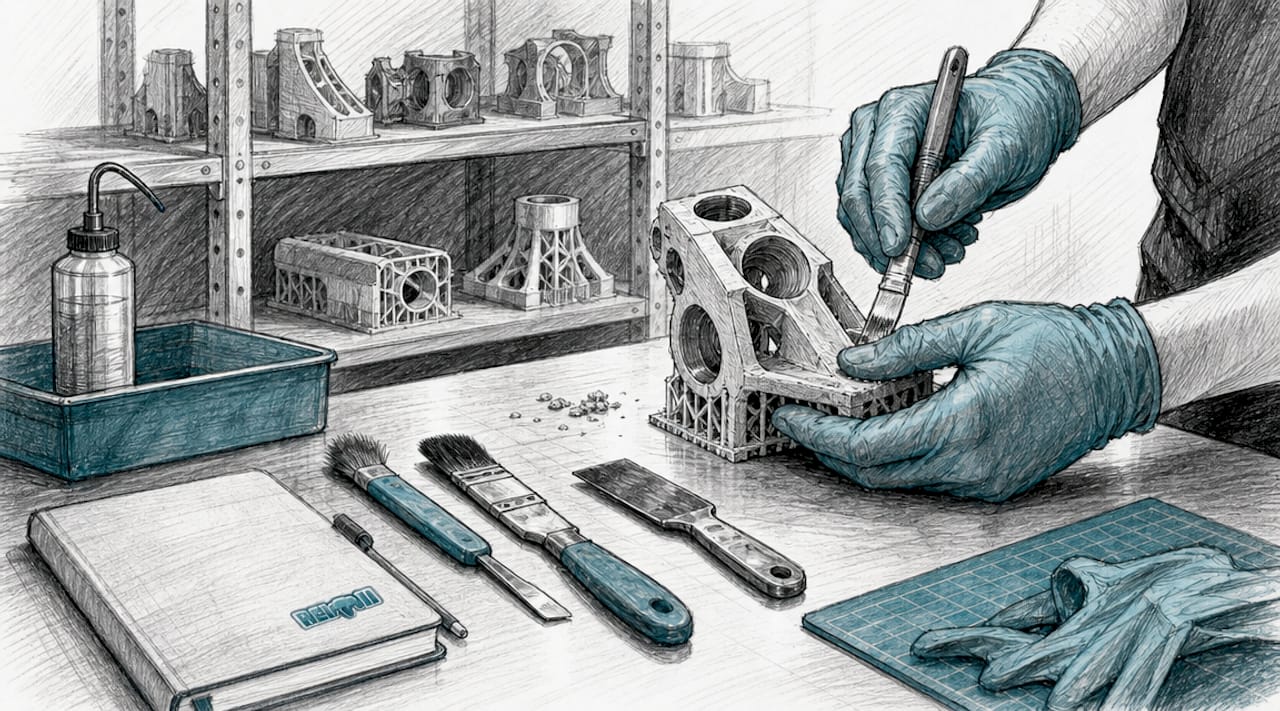
Treating these parts as engineering objects with real-world requirements, rather than as display models, reduces surprises during validation and improves finished product outcomes. This mindset shift is what separates those who get reliable functional parts from those who end up with premature failures.
How do the processes and materials for functional parts work?
The 3D printing process determines mechanical properties as much as the chosen material. The three most used processes for functional components are FDM (fused deposition modeling), SLA (stereolithography), and SLS (selective laser sintering), each with a distinct performance profile.
- FDM uses thermoplastic filaments like PLA, PETG, ABS, or Nylon. It is the most accessible process, but parts show anisotropy between layers, which reduces strength along the Z axis. It is suitable for functional parts with low to medium demands.
- SLA solidifies photopolymer resin with ultraviolet light. The choice of technical resin is key: detail resins offer fine finishes but fail under real loads or high temperatures, while technical or tough resins provide toughness and dimensional stability after curing.
- SLS sinters powder materials like PA12 (polyamide 12) without the need for supports. SLS parts achieve isotropic strength in all three axes, making them suitable for end-use applications and low-volume production with tolerances of ±0.2 mm.
Post-processing is also part of the functional process. SLS printed parts that require very tight assembly tolerances may need CNC reaming in critical holes. Planning this step from the design avoids delays and ensures the component fits correctly in the final assembly.
Professional tip: When designing for SLS or FDM, add between 0.1 mm and 0.2 mm of clearance in assembly fits. Post-processing can recover tolerances, but it is easier to plan it from the CAD file than to correct it after printing.
What industrial examples illustrate the use of functional 3D printed components?
Industrial cases demonstrate that 3D printing of functional parts is no longer experimental. Two specific examples illustrate the real scope of this technology.
The first is the active rear wing system developed with iglidur® i3 bearings. This tribological material combines solid lubricants with high-performance plastics to create self-lubricating components. The result is abrasion resistance 30 times greater than conventional materials, with no maintenance required. Additionally, the complex internal geometry of the bearing is manufactured in a single piece, something impossible with traditional machining.
The second case is the D3D piano hammer mechanism, where traditional wooden parts are replaced by laser-sintered iglidur® i3 technical plastics. The plastic component faithfully replicates the original geometry and also resists moisture and wear better than wood, conditions that degrade traditional mechanisms over time.
| Use case | Material / Process | Main advantage |
|---|---|---|
| Active rear spoiler | iglidur® i3 / SLS | Abrasion resistance 30x greater, maintenance-free |
| Piano hammer mechanism | iglidur® i3 / SLS | Moisture and wear resistance superior to wood |
| Low volume production | PA12 / SLS | Tolerances ±0.2 mm, delivery in 3 to 4 days |
| Assembly components | Thermoplastics / FDM | Integration of multiple parts into a single body |
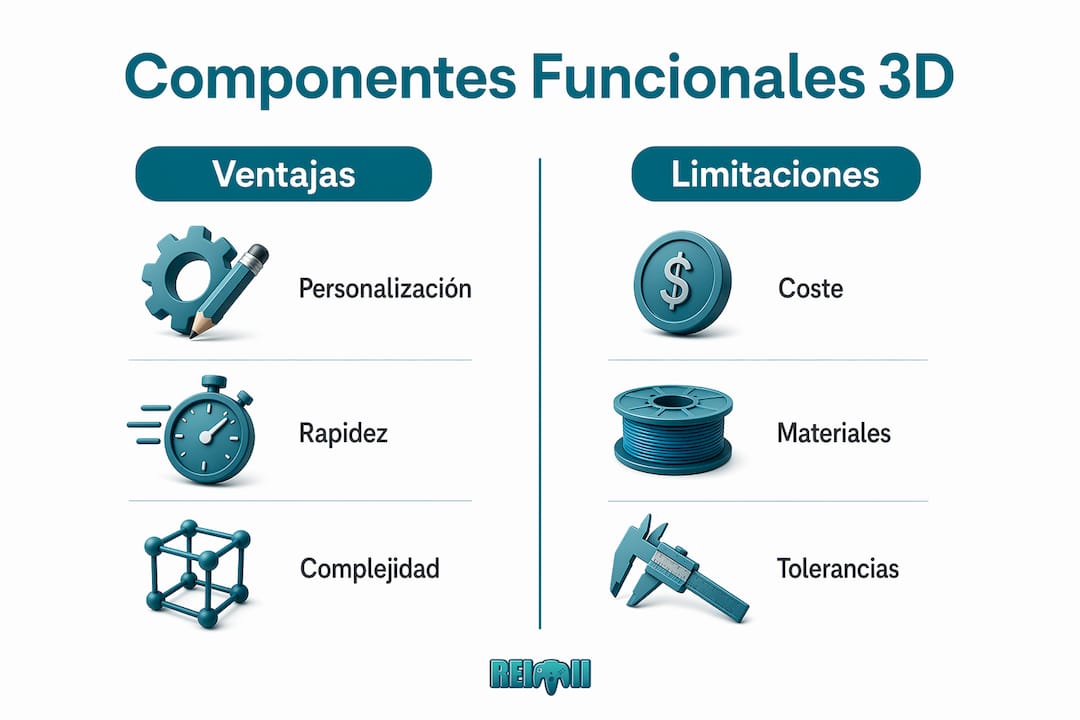
These cases share a pattern: 3D printing not only replicates an existing part but improves its function thanks to design freedom and optimized material selection. Integrating multiple parts into a single print reduces assembly costs and failure points.
What are the advantages and limitations of functional 3D printed components?
Additive manufacturing offers real benefits for functional components but also has limits that should be understood before committing to a design.
Main advantages:
- Design freedom: internal geometries like fluid channels or lattice structures can be manufactured without additional tools.
- Customization without tooling cost: modifying an STL or STEP file does not incur the cost of making a new injection mold.
- Function integration: manufacturing functional individual parts without retooling reduces the number of components in the assembly.
- Speed: SLS services deliver functional parts in 3 to 4 days, speeding up development cycles.
- Specialized materials: options like PA12, technical resins, or tribological materials allow mechanical properties to be tailored to the final use.
Limitations to consider:
- Tight tolerances (below ±0.1 mm) require additional postprocessing, such as CNC machining.
- Design-for-postprocessing planning is essential for parts with critical assemblies.
- Long-term durability under intense cyclic loads is still inferior in many cases compared to machined or injection-molded parts.
- Choosing material based only on visual finish is the most common mistake. The correct selection prioritizes post-cure mechanical properties over surface appearance.
Professional tip: Before printing a series, validate the functional component with at least three pieces under real use conditions. Detecting failures at this stage costs much less than fixing them in production.
How to customize and apply functional 3D printed components in your projects?
Customizing a functional 3D printed component requires decisions on three levels: material, geometry, and finish. Following a logical order avoids unnecessary iterations.
- Define the function before the material. Determine if the part needs to withstand static or dynamic loads, temperature, humidity, or friction. This list of requirements filters viable materials before opening the design software.
- Choose the right file format. 3D printing services mainly accept STL files for surface geometry and STEP for solid models with parametric tolerances. The STEP format is preferable when the supplier needs to adjust dimensions.
- Design with post-processing in mind. If the part has assembly holes with critical tolerances, design with clearance and plan for reaming afterward. This especially applies to SLS and FDM processes.
- Choose finishes based on function, not just aesthetics. For moving parts, a polished finish reduces friction. For parts exposed to UV or moisture, a protective coating extends lifespan. You can check options for finishes on 3D products to understand how they affect final performance.
- Validate with small series before scaling up. Validating functional components through small batches under real conditions improves confidence and reduces failures when you increase production volume.
For unique projects or small series, additive manufacturing competes directly with CNC machining in cost and time. The key is to align the printing process with the final use from the first sketch, not as a later correction.
Key points
Functional 3D printed components are real engineering parts: their value depends on choosing the right process, material, and post-processing from the design stage.
| Point | Details |
|---|---|
| Functional definition | A functional part meets real mechanical or thermal requirements, not just visual ones. |
| Process and material go hand in hand | SLS with PA12 offers isotropic strength; SLA with technical resin provides dimensional stability. |
| Planned post-processing | Critical tolerances require post-machining; designing for it from the start avoids delays. |
| Proven industrial examples | Active spoilers and piano mechanisms demonstrate real improvements in wear and durability. |
| Customization without tooling | Modifying an STL or STEP file has no mold cost, which speeds up design iterations. |
Functional 3D printing is no longer just for engineers with industrial budgets
I’ve been observing for some time how the conversation about 3D printing splits into two groups that almost never talk to each other: those who print decorative figures and those who make engineering parts. The reality is that boundary is blurring, and faster than many expect.
What I find most interesting is not the technology itself, but the mindset shift it demands. When someone asks me why their printed part failed, the answer is almost always the same: they chose the material based on how it looked on screen, not how it would behave under load. Tribological compatibility and optimized materials are decisive for moving components, and that knowledge isn’t in beginner 3D printing tutorials.
The other point I usually emphasize is customization as a real competitive advantage. I’m not just talking about changing colors or adding a logo. I mean designing a part that integrates three functions in a single body, requires no assembly, and that you can iterate on in days. That’s something conventional manufacturing can’t match in small series. The 2026 design trends point precisely in that direction: impossible geometries, functional materials, and total customization as a standard, not an exception.
My advice for beginners: treat each functional part as an engineering problem from the first sketch. Define the requirements before opening the software. That discipline makes the difference between a part that works and one that looks good but fails under the first real load.
— Marina
Functional components 3D printed for your projects with Reimii
Reimii applies exactly this philosophy in every product it makes: functionality first, design second.
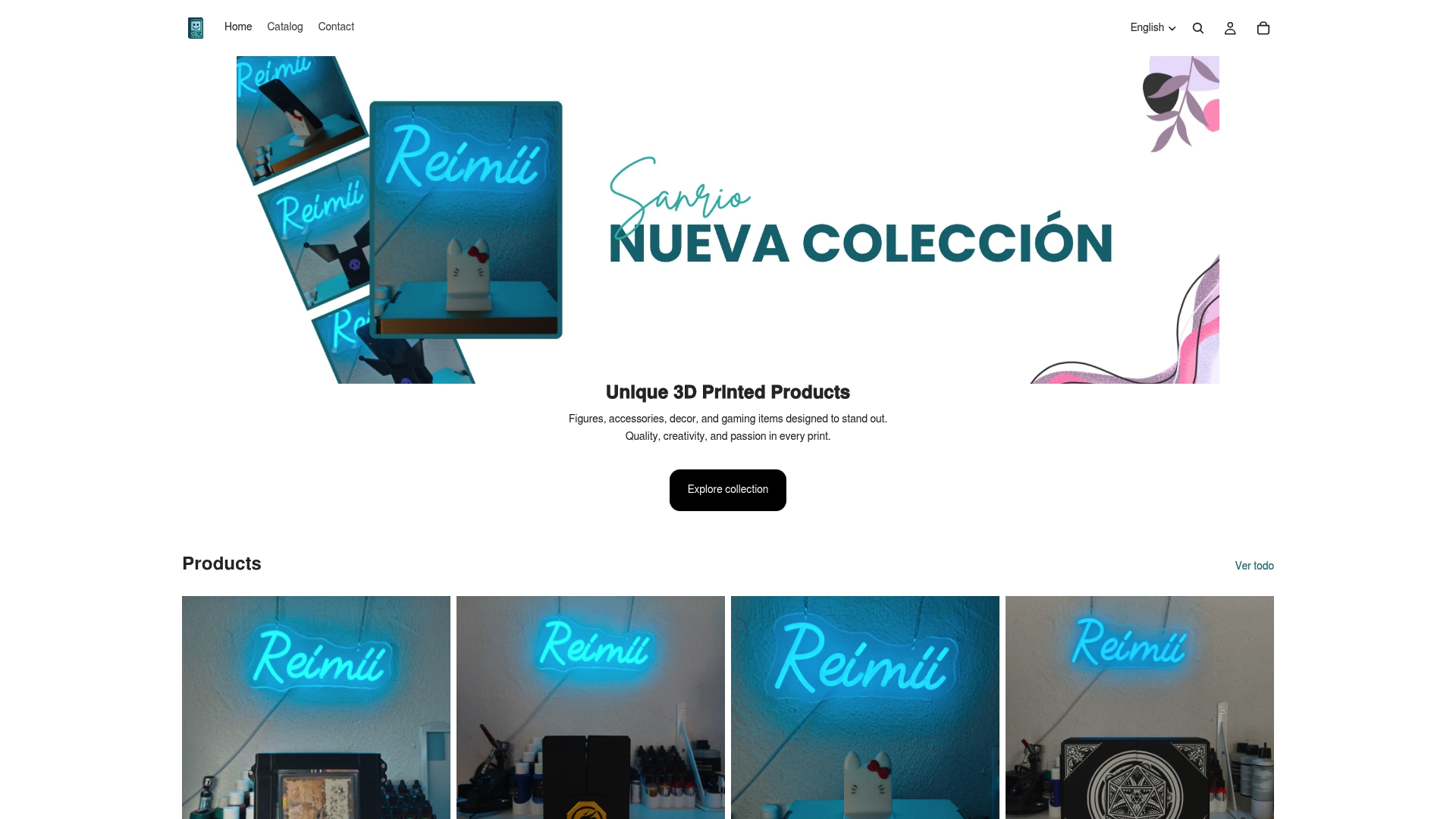
Reimii’s TCG card boxes are a direct example of functional 3D printed components designed for real use. Every hinge, latch, and compartment is designed to withstand daily use, not just to look good in a photo. If you’re looking for a solution that combines protection, customization, and additive manufacturing quality, the Reimii TCG collection includes compact and mechanical options adapted to different game formats. Each piece follows the same principle that governs any serious functional component: material and process serving the function.
FAQ
What Distinguishes a Functional Component from a Visual Prototype?
A functional component meets real mechanical, thermal, or tribological requirements in the final product. A visual prototype only replicates appearance without needing to withstand loads or assembly tolerances.
Which 3D Printing Process Is Best for Functional Parts?
SLS with materials like PA12 offers isotropic strength and tolerances of ±0.2 mm, making it the most suitable process for end-use functional parts. FDM is valid for low to medium mechanical demands.
What Materials Are Used in Functional 3D Printed Components?
The most common materials are PA12 for SLS, technical resins for SLA, and Nylon or PETG filaments for FDM. For components with friction or wear, tribological materials like iglidur® i3 offer self-lubrication without maintenance.
What Files Do I Need to Print a Functional Component?
Printing services mainly accept STL and STEP files. STEP format is preferable when the provider needs to adjust parametric tolerances before manufacturing.
When Does It Make Sense to Use 3D Printing Instead of CNC Machining?
3D printing is more advantageous for small series, complex internal geometries, and when rapid design iteration is needed without tooling costs. CNC machining remains superior for tolerances below ±0.05 mm or high-volume production.
0 comments