


A 3D printed card box is not just a case. It is a precisely designed object to protect, organize, and personalize your card collection, made layer by layer with a fused material deposition printer. If you have ever wondered what a 3D printed card box is and why so many players and collectors prefer them over generic commercial options, you are in the right place. Here you will understand how they work, what materials are used, how they are printed, and why they represent one of the most creative applications of home 3D printing.
Table of contents
Key points
| Point | Details |
|---|---|
| Clear definition | A 3D printed card box is a case made by FDM printing designed to store and protect game or collectible cards. |
| Key materials | PLA and PETG are the most used; PETG is preferred for hinges due to its lower adhesion in moving areas. |
| Modular design | Modular models allow capacity expansion as the collection grows, without buying a new box. |
| Integrated mechanisms | “Print in place” printing creates functional hinges without post-assembly, saving time and loose parts. |
| Main uses | Storage of TCG decks, organization of games like Pokémon or Magic, and personalized gifts for collectors. |
What is a 3D printed card box: definition and types
A 3D printed card box is a case designed to store game and collectible cards, made using FDM printing (fused deposition modeling). Unlike the injection-molded plastic boxes you find in stores, these are designed from scratch to fit a specific card format, a specific number of cards, and user preferences.
The concept covers a wide variety of formats. There are boxes designed for TCGs (trading card games) like Magic: The Gathering or Pokémon, with capacity for 60, 100, or more than 115 sleeved cards. There are also designs for UNO cards and Spanish playing cards, with dimensions adjusted to those formats and hinge mechanisms integrated directly into the print.
Most used materials
The two dominant materials in this type of printing are:
-
PLA (polylactic acid): easy to print, rigid, and available in countless colors. It is the first choice for box bodies without moving parts.
-
PETG (polyethylene terephthalate with glycol): more flexible and heat resistant. It is especially recommended for hinges and flex zones, since PETG is preferred for hinges due to its lower internal adhesion, while PLA tends to stick and cause jams in those areas.
Modular designs versus compact designs
Compact designs are single-piece boxes, ideal for carrying a specific deck. Modular ones, on the other hand, allow joining several modules to expand capacity as the collection grows. A typical modular model for TCGs can store at least 100 sleeved cards and expand by adding new compartments.
Pro tip: If you start with a small collection but plan to expand it, always choose a modular design from the start. Switching from a compact box to modular when you already have 200 cards is more costly in time and material.
Mechanisms and technical design in 3D boxes
The technical aspect is where 3D printed card boxes really differ from any commercial alternative. There are two mechanisms that define the user experience: “print in place” hinges and magnetic closures.
How “print in place” works
The “print in place” technique consists of printing moving parts, like hinges, directly integrated into the box structure, without needing to assemble them afterward. The printer deposits material so that the articulated parts are separated by a minimal tolerance that allows movement once the piece cools.
Properly setting up the print in moving areas is key to obtaining functional hinges without complicated post-processing. This means adjusting layer height, number of perimeters, and infill angle in the flex zones. A configuration error here results in hinges that don’t open or break on first use.
Magnetic closures: convenience and precision
Magnetic closures add a level of sophistication that collectors appreciate. A magnetic box for 115 cards requires magnets of specific size to ensure a secure closure, neither loose nor difficult to open. The most common standard is 7x2 mm magnets.
The following table summarizes the differences between the two most common types of closures:
| Type of closure | Advantages | Considerations |
|---|---|---|
| “Print in place” hinge | No extra parts, direct printing, low cost | Requires PETG and precise slicer settings |
| Magnetic closure | Smooth opening, professional look | Requires specific magnets and glue to fix them |
Pro tip: For magnetic closures, apply glue with a fine stick and let the box cure closed for at least an hour. This way, the magnets align perfectly and the closure is symmetrical.
Practical applications: games, collecting, and gifts
Knowing what a 3D printed card box is is just the first step. The interesting part is how it’s used in practice. These are the most common applications you’ll find among players and collectors:
-
TCG deck storage: Magic: The Gathering, Pokémon TCG, or Yu-Gi-Oh! players use these boxes to protect their tournament decks. A compact MTG deck box 3D printed protects 100 sleeved cards and fits in any backpack.
-
Board game organization: UNO cards, family games, or Spanish playing cards have different formats than TCGs. A custom box for that format prevents cards from bending or getting lost inside the original game box.
-
Personalized gifts: a box with the recipient’s name, their favorite character, or their team colors is a gift no store can offer. Ornamental boxes with filigree designs, for example, are used as wedding card boxes or gift envelope holders.
-
Serious collecting: for collectors with hundreds or thousands of cards, modular designs are the most practical solution. They allow you to expand capacity without changing the storage system.
The key to choosing the right box is simple: first define the format of your cards (with or without sleeves), the approximate number of cards you want to store, and whether you need frequent transport or static storage. With these three pieces of information, the correct model narrows down to a few options.
How to print and assemble a 3D card box
If you have access to a 3D printer or plan to get one, the process to get your own 3D printed card box follows these steps:
-
Choose the model and download the STL file. Platforms like Cults3D or Printables offer free and paid models. Look for models with high ratings and comments confirming the tolerances work well.
-
Choose the material according to function. Use PLA for the main body if you want rigidity and a variety of colors. Use PETG if the model includes “print in place” hinges or flexible areas.
-
Set up the slicer correctly. For hinges, use two layers with perpendicular infill in the folding areas. A layer height of 0.2 mm is the usual starting point to balance speed and detail.
-
Print and check the tolerances. Before printing the complete box, print only the hinge or closure area to verify the fit is correct. Fixing an error on a small piece takes minutes; on the full box, it takes hours.
-
Assemble the additional components. The modular models with M2 screws require inserting the screws carefully to avoid deforming the plastic. For magnets, use fine-tipped pliers to fit them into their housings without forcing the piece.
Pro tip: If the model uses magnetic closures, first print a version in PLA to check that the cards fit in and out comfortably. Only then print the final version in the definitive material.
My perspective on 3D printed card boxes
What has surprised me most when exploring this world is that the real barrier to entry is not the printer. It’s understanding that design matters as much as the material.
I have seen many enthusiasts frustrated because they printed their first box in PLA with integrated hinges and the result was a lid that wouldn’t open. The problem wasn’t the printer or the filament. It was not knowing that PETG is the right choice for those moving parts. A small technical detail that completely changes the outcome.
What I find genuinely fascinating is how 3D printing democratizes customization. Before, having a card box with the exact design you wanted meant ordering it from a manufacturer with production minimums impossible for an individual. Today, with an STL file and two hours of printing, anyone can have a modular box that fits their collection perfectly.
The 3D card boxes are not just containers. They are an expression of how someone organizes and values their collection. And that, for a collector, carries real weight.
— Marina
3D printed boxes ready to use with Reimii
If you prefer to skip printing and have a quality box directly in your hands, Reimii has what you’re looking for.
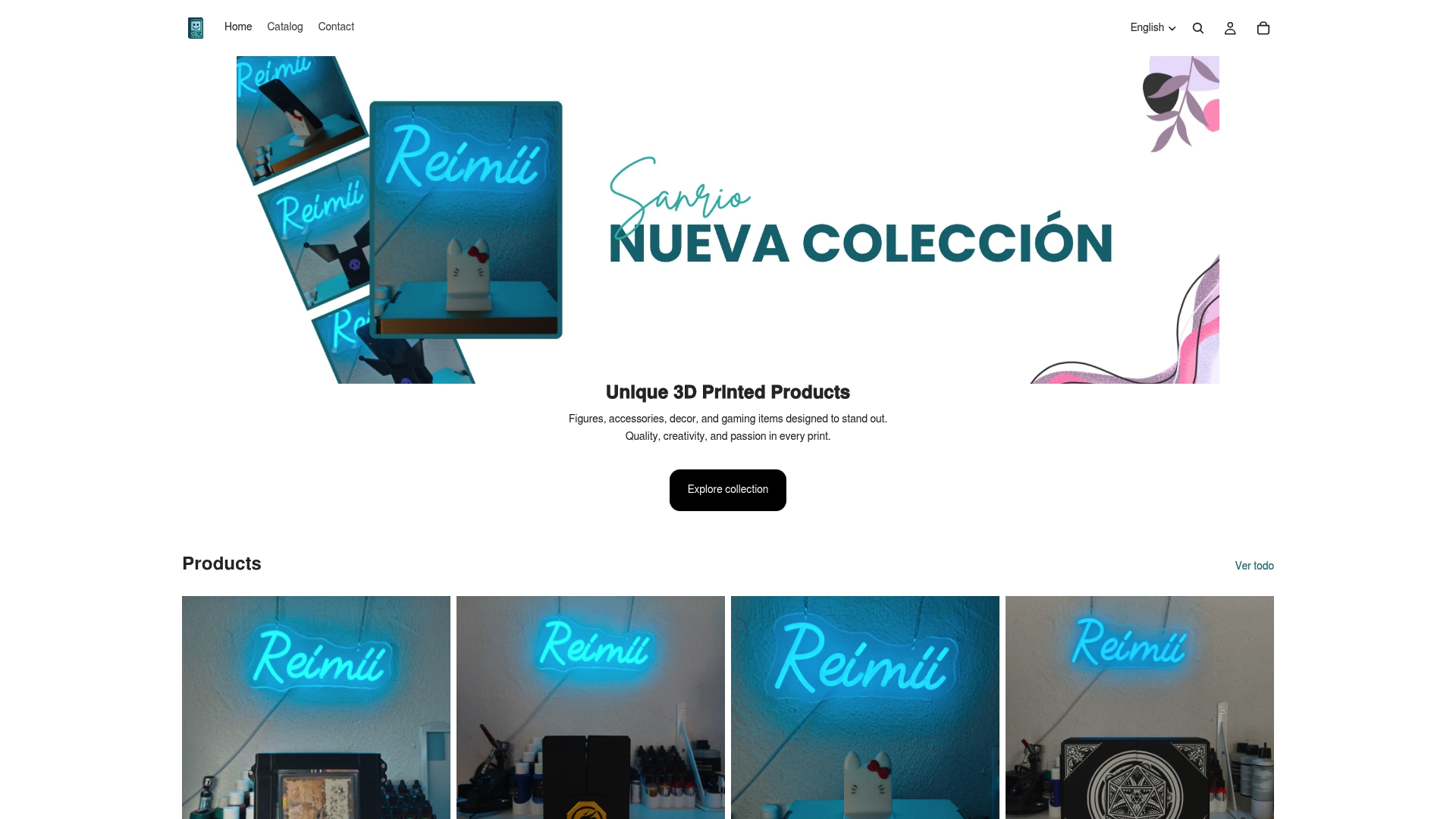
Reimii specializes in 3D printed boxes and accessories for players and collectors. Their catalog includes compact boxes for 100-card sleeved decks, boxes with advanced mechanisms like the mechanical deck box for TCG, and modular options for growing collections. Each product comes off the printer with tolerances already verified, magnets placed, and hinges tested. No calibration or assembly needed. Just store your cards and play.
FAQ
What materials are used to print a 3D card box?
The most used materials are PLA and PETG. PLA is ideal for the box body due to its rigidity and ease of printing, while PETG is recommended for hinges and moving parts because it is less prone to sticking during printing.
How many cards fit in a 3D printed card box?
It depends on the model. Compact boxes usually hold between 60 and 100 sleeved cards. Larger magnetic models hold up to 115 sleeved cards, and modular designs allow expanding capacity by adding more modules without a fixed limit.
Is it difficult to print a 3D card box at home?
Not especially, if you choose a well-documented model. The biggest challenge is the “print in place” hinges, which require using PETG and properly configuring the slicer. For the rest of the box, any FDM printer with standard PLA produces good results.
What advantage does a custom card box have over a commercial one?
A custom card box fits exactly the format and number of your cards, can include your name or favorite design, and is usually more durable than the generic plastic boxes that come with the games.
For which card games are these boxes used?
The most common uses are for TCGs like Magic: The Gathering, Pokémon, and Yu-Gi-Oh!, although there are also models for UNO, Spanish playing cards, and other board games with non-standard card formats.
Comentarios
Todavia no hay comentarios.