


If you’ve ever faced choosing between different types of collectible 3D printed figures and didn’t know where to start, you’re not alone. Additive manufacturing, as this process is technically called, has multiplied possibilities for collectors to an overwhelming degree. Today you can print anything from a 28mm miniature for wargames to a custom chibi figure of your favorite character. But each type has its own technical demands, materials, and post-processing challenges that you should understand before investing time and money.
Table of contents
- Key points
- 1. Criteria for choosing types of collectible figures in 3D printing
- 2. Types of 3D printable collectible figures
- 3. Practical comparison between technologies
- 4. How to select the ideal type for your collection
- My vision on 3D printed collectibles
- Discover Reimii’s catalog for collectors
- FAQ
Key points
| Point | Details |
|---|---|
| Resin outperforms FDM in detail | For collectible figures, resin captures textures and finishes that FDM cannot match. |
| The type defines the technical setup | Each figure category requires different printing parameters: supports, orientation, and layers. |
| Post-processing determines the final quality | Sanding, curing, and painting are steps that transform a printed piece into a real collectible. |
| Customization has geometric challenges | Converting photos into printable figures requires validation before starting the print. |
| Communities and STL files are the starting point | Specialized platforms segment by niches to make finding the right model easier. |
1. Criteria for choosing types of collectible figures in 3D printing
Before choosing a specific type of figure, you need to understand which technical variables define the final result. It’s not just about aesthetics. The technology you use changes everything.
Resin vs. FDM: the difference that matters most
The most relevant distinction for any collector is between resin printing (SLA, DLP, or MSLA) and FDM printing. Resin achieves layer heights between 25 and 50 microns, while FDM works between 100 and 200 microns. In practical terms, this means resin captures clothing folds, facial expressions, and scale textures that FDM simply blurs.
For collectors, finish matters more than cost. An FDM printer can be faster and cheaper, but if your goal is a piece you can proudly display, resin is the natural choice. That said, FDM has its place in large, structural figures or when fine detail is not a priority.
Materials, resolution, and scale
ABS-like resin resists impacts better than standard resin, making it preferable for figures that will be handled frequently. Water-washable resins simplify post-processing without sacrificing detail. For FDM, PLA is the entry point, but PETG offers greater durability if the figure will see heavy use.
Scale also dictates the technology. A 30mm figure necessarily requires resin. At 150mm or more, FDM can work if combined with good sanding.
Supports and orientation: the silent factor
Models with many overhangs require tree-type or hybrid supports to avoid ruining the visible surface. Print orientation is not arbitrary. A figure oriented with the torso facing down can minimize marks on the face, which is the most visually critical area.
Pro tip: Use a support overhang angle of about 45 degrees to minimize support marks without compromising the structural integrity of the piece during printing.
2. Types of 3D printable collectible figures
Here is the core of what you are probably looking for. Collectible 3D models are divided into fairly defined categories, and each has its own technical and aesthetic ecosystem.
Miniatures for wargames and detailed collections
They are the reference standard for resin printing. Scenes from Warhammer 40,000, Dungeons & Dragons, or skirmish games require figures between 28mm and 75mm with extreme detail. Digital sculpting combined with retopology is the dominant method to achieve complex organic shapes that are printable without generating problematic geometry.
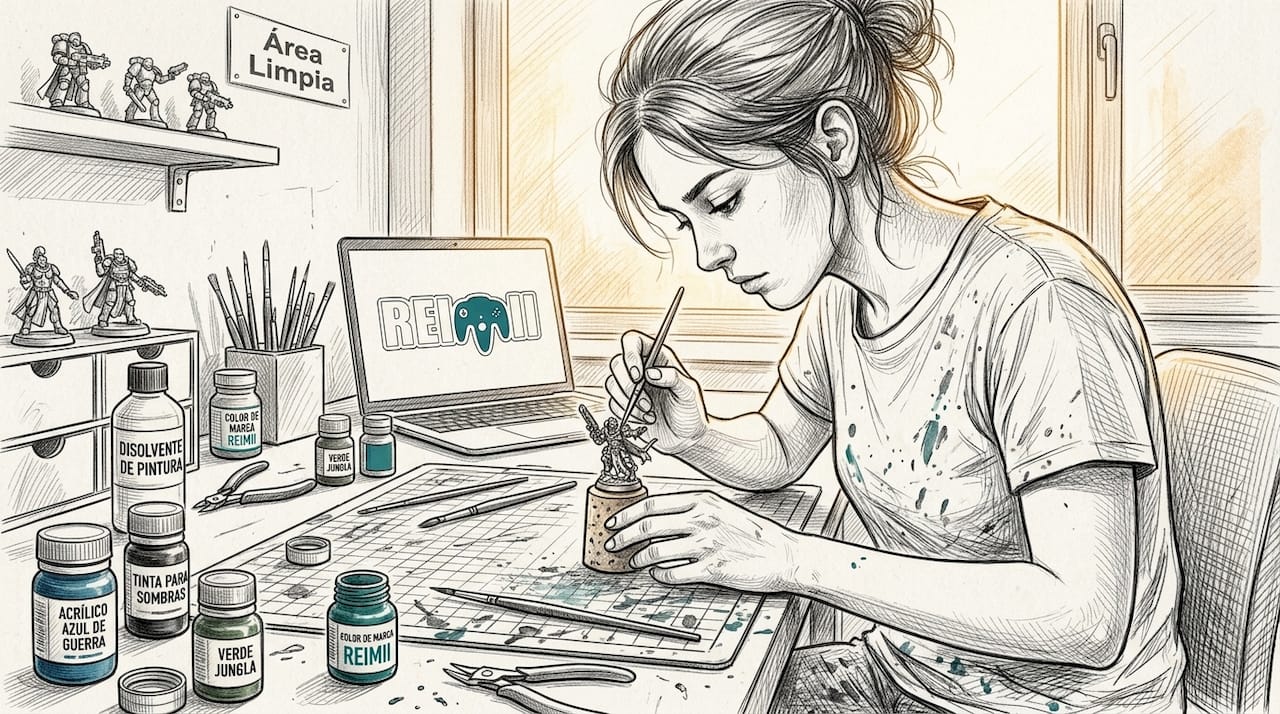
For this type, the full workflow is crucial: modeling, support orientation, washing, curing, and painting. This complete process is what turns a piece into a true collectible and not just a simple visual prototype.
LEGO-compatible minifigures
A niche that has grown enormously. These figures must meet very strict dimensional tolerances for the fittings to work. The recommended parameters are: layer height between 0.02 and 0.05mm, medium or heavy supports, an angle between 30 and 45 degrees, and the use of ABS-like or washable resins.
What makes this type special is that respecting tolerances and orientations is not optional. A fraction of a millimeter error can cause the head not to fit or the lower stud to break when pressed. If you’re interested in collectibles of this type, you can find useful context about the market in high-end LEGO collection analysis.
Custom figures from photographs
This type has the greatest emotional potential and also the most technical challenges. Turning a photo into a customizable 3D figure involves reconstructing three-dimensional geometry from two-dimensional information. The process requires practical validation to avoid unprintable geometry or structures that demand excessive supports.
A proven example: 120mm custom figures optimized for resin and hand-painted produce artisanal-quality results that are hard to achieve with any other technology.
Dioramas and complete scenes
For the advanced collector who doesn’t want a loose figure but a complete narrative scene. A 3D printed diorama can include backgrounds, textured bases, multiple characters, and architectural elements. The challenge here is managing printing in parts to avoid pieces that are too large and fail midway through the process.
Pro tip: Divide the diorama into individually printable modules and use them as assembleable pieces. This reduces the risk of print failures and makes painting by sections easier, improving the final result.
Chibi and cartoon-style models
Chibi models have exaggerated proportions, large heads, and simplified bodies, making them more tolerant of printing parameters. They are an excellent entry point for those starting to print 3D collectible figures because they better forgive orientation and support errors. Additionally, they are popular in communities organized by niches such as anime or video games, where platforms like Cults segment collections to facilitate searching by specific tastes.
Hybrid figures with movable parts
The highest level of complexity. A figure with functional joints, doors that open, or interchangeable accessories requires assembly tolerances between 0.1 and 0.3mm depending on the material. Here, generative design and printable geometry optimization make the difference between a functional figure and one that breaks at the first movement.
3. Practical comparison between technologies
| Criterion | Resin (SLA/DLP/MSLA) | FDM | ABS-like resin |
|---|---|---|---|
| Level of detail | Very high (25-50 microns) | Medium (100-200 microns) | Very high |
| Surface finish | Smooth, no visible lines | Visible layer lines | Smooth |
| Post-processing | Washing + curing + painting | Sanding + priming + painting | Washing + curing + painting |
| Mechanical strength | Medium-low (standard) | High | High |
| Material cost | Medium-high | Low | Medium-high |
| Ideal for | Miniatures, LEGO figures, chibi | Large dioramas, structures | Figures with functional joints |
For figures intended for static display, standard resin is sufficient and provides the best visual results. For pieces that are handled, played with, or have moving parts, ABS-like resin or PETG in FDM are more suitable.
The total cost of printing collectible figures varies greatly. An entry-level resin printer costs between 200 and 400 euros, but you must add the cost of resin (25-50 euros per liter), washing products, and post-processing time. Many collectors prefer to order pieces from specialized services to skip that learning curve. To better understand how these pieces are valued in the market, it’s worth consulting analyses on the value of 3D figures.
4. How to select the ideal type for your collection
Choosing well starts with knowing what you want the figure for. A piece for playing is not the same as one for displaying.
- If your goal is pure display: prioritize standard resin, maximum detail, and hand-painted finishes. Wargame miniatures and anime character figures are the perfect example.
- If you will handle the figure frequently: choose ABS-like resin or FDM with PETG. The durability compensates for the lower surface detail.
- If you want extreme customization: figures made from photographs or narrative dioramas are your niche. But be prepared for a longer and more technical process.
- If you have a limited budget: start with chibi models in FDM. They are more forgiving, STL files are abundant, and the margin of error is smaller.
3D printing has democratized creation of figures that were previously impossible to get on the traditional market. Today you can have a unique edition figure, customized to your taste, without relying on manufacturers or mass production runs.
Pro tip: Before printing a complex model, request a preview in the slicer with supports enabled. If the model generates more supports than actual volume, consider changing the orientation or simplifying the geometry before wasting material.
Current trends point toward figures with greater integration of procedural textures, open-license video game characters, and modular diorama kits. For inspiration and quality STL files, community-segmented platforms for anime, video games, and collecting are the most efficient resource. Learning to distinguish an authentic collectible figure from a low-quality replica is also a skill every collector needs to develop.
My vision on 3D printed collectibles
I’ve seen this world evolve since the first affordable resin printers hit the market. What has surprised me most is not the technical quality achievable, but how much personalization has changed the collector’s emotional connection to their collection.
Before, collecting meant searching and acquiring. Now, it can mean creating. And that changes everything.
What I’ve learned working with these materials is that most mistakes don’t happen at the printer. They happen earlier, in model selection, support setup, and expectations about post-processing. Beginners often underestimate finishing time. More experienced users underestimate the potential of hybrid formats and moving parts.
My honest recommendation for beginners: don’t try to print the most complex figure you find. Start with an 80mm chibi, learn how to orient it, manage supports, and practice painting. That process will teach you more than any tutorial. For those with experience, the leap to custom figures based on photos or narrative dioramas is where the hobby truly becomes your own.
The future of 3D printed collectibles is not in replacing commercial figures. It lies in offering what those figures can never provide: unique, one-of-a-kind pieces that tell a personal story.
— Marina
Discover Reimii’s catalog for collectors
If you’ve been looking for 3D printed figures with the quality and customization your collection truly deserves, Reimii is the answer you probably hadn’t found yet.
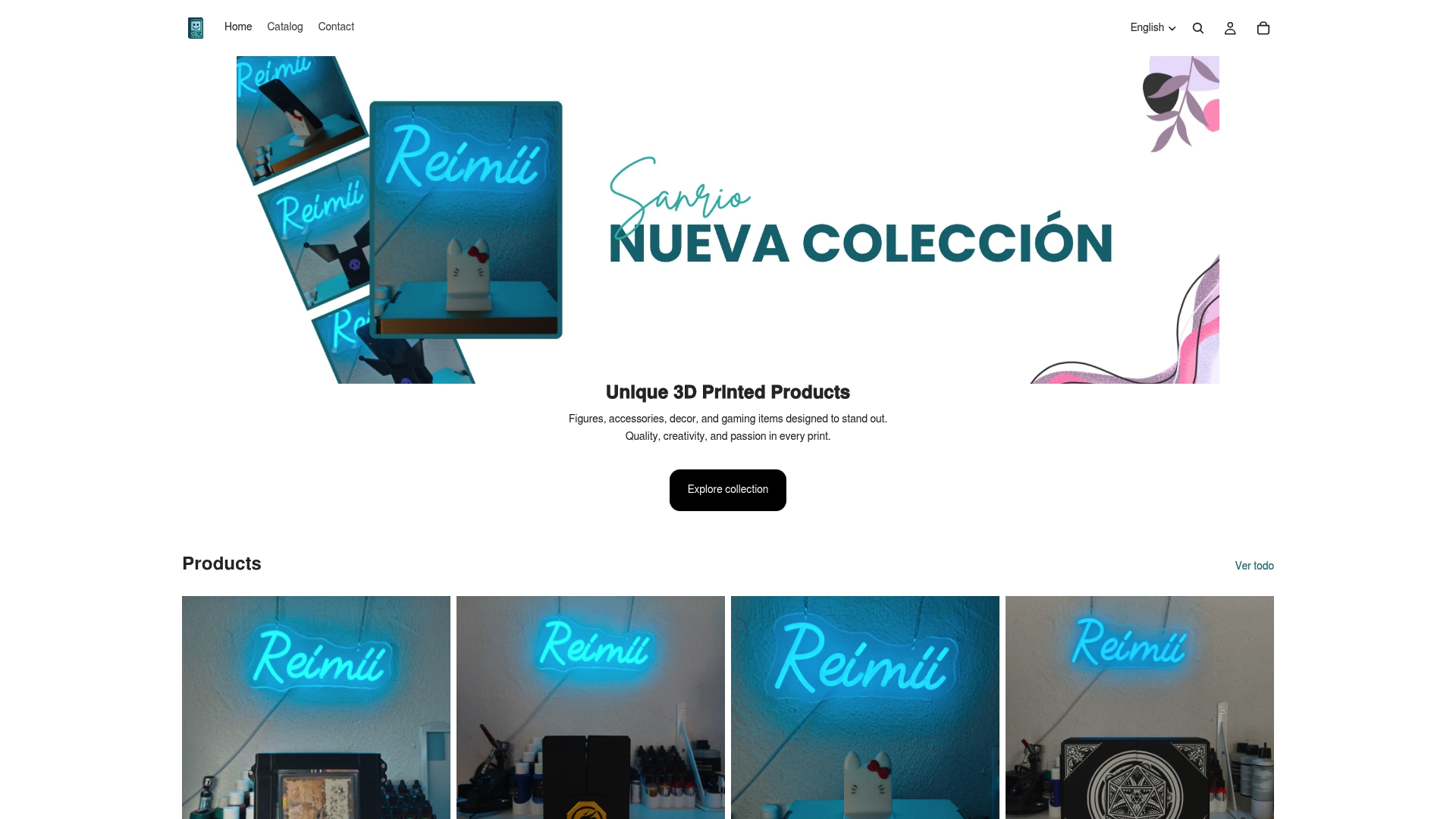
Reimii combines high-resolution printing technology with real attention to detail in every piece. Whether you’re looking for accessories for your favorite games or figures to display, at the Reimii store you’ll find products that exceed the usual market standard. You can directly explore the most popular products among the collector community or dive into the gaming and role-playing section if that’s your world. Each piece reflects what it means to create with real judgment and passion for collecting.
FAQ
Which technology is best for collectible figures?
Resin (SLA, DLP, or MSLA) is the preferred option for collectible figures because it achieves layer heights of 25 to 50 microns, capturing fine details that FDM cannot reproduce with the same fidelity.
Can I print custom figures from a photo?
Yes, but the process requires converting the image into valid 3D geometry and validating the model before printing to avoid excessive supports or unprintable areas that ruin the result.
What type of figure is easiest to print for a beginner?
Chibi and cartoon-style models are the most recommended to start with. Their simplified proportions better tolerate orientation errors and cause fewer support issues than detailed realistic figures.
How much does it cost to print a collectible figure in 3D?
The cost varies depending on the technology and size. An entry-level resin printer costs between 200 and 400 euros, plus material and post-processing. Many collectors prefer to use external services to avoid the initial learning curve.
Where can I find STL files for collectible figures?
Platforms like Cults3D segment their catalog by niches such as anime, video games, and wargames, making it easier to find specific models tailored to each collector's style.
Comentarios
Todavia no hay comentarios.